Tag Archives: science

Statistics, Scientists and Religion


Sermon for the Admissions Eucharist, Dr David Walker
Bishop of Manchester and Visitor to the Society
Society of Ordained Scientists, Retreat, Richmond, VA
, 2018

As most of you know, I’m not a proper scientist, I’m a mathematician who dabbles a bit in statistics. But on the plane coming across to the US I was reading a report on a survey of 3000 scientists in the UK, France and Germany, that was examining the evidence for the popular belief that science and religion are at war.
These three European countries (assuming I’m still allowed to consider the UK as European until Brexit) would all be classified as at the secular end of the scale. Yet what was interesting was that only a quarter identified as atheists, and around half claimed to be religious or spiritual in some way. Only a minority among the atheists believed science and religion are opposed. and quite a small minority of them saw science and the broader notion of spirituality as being in conflict. Particularly interesting was that atheism scores were lower for those who had higher scientific qualifications, doctorates for example. The high profile, high performing, anti-religious polemicist could well be categorized as an endangered species. I was pondering that we should maybe set up sanctuaries for them in places that would minimize contact with the outside world. But I’m not sure sanctuary is a word they could cope with.
Anyway, none of these findings imply that we should simply assume the argument to have been won, endangered species are always worth studying. But maybe it suggests that the force of our efforts should and could lie elsewhere. Let me offer you three challenges, or opportunities, that arise from these Ipsos-Mori research findings, one for each of the three main non-atheist groups. Some of you are probably already doing a lot of this.

Strengthening the faithful

  • Being visible in a society where religion is treated as private. Physically visible, visible in the cyber world, visible in magazines, journals etc. Housing example.
  • Sermons and liturgies that take science seriously – maybe special events to appeal to those who don’t want a weekly habit.
  • Finding people things to do. How can a faithful scientist grow their faith through practical action or engagements? Faith, like a bodily muscle, grows when you exercise it. Give it nothing to do and it will slowly atrophy.
  • Helping people articulate what they believe and how it relates to their science –
  • De-compartmentalizing, to use some of the language we have been working with this
    week.
  • Scientists in Congregations event at Manchester Cathedral this coming Tuesday.

Encouraging the spiritual

  • Offering a spirituality that goes beyond the individual’s private experience.
  • Awe and wonder at the natural world as shared phenomena.
  • Opening up the mystical traditions of faith. It’s not primarily about dogma.
  • Quest religiosity.
  • Building that inhabitable house that Stig has referred to in our conversations. For some people the Chapel is there in the basement, alongside the foundations, for others it’s on the roof, the final element to be put in place. Spirituality can lead to belief as well as the other way round.
  • I not sure there has been enough exploration of what a good science informed spirituality looks like. The Western tendency to look for spirituality in pre-scientific societies may not be a help.
  • Turning spiritual values into practical action.

Engaging the undecided

  • Opening the mind through meditation. Conversation with senior BBC director.
  • Ethics – paralleling the responsible shareholder movement, what is responsible
    science? Too often ethics seems to be a box to be ticked when getting a research proposal through the maze of university protocols. The Ethics Committee is one more hurdle to jump, and once you’ve cleared it you can forget it. What does it mean to take a responsible, ethical approach at every stage of the scientific process?
  • Enjoying uncertainty together – the Quest dimension of religiosity. It’s ok to have doubt, it’s even better to enjoy doubt and uncertainty, especially when they become the energy to explore further. Not to reach certainties but to find some even more exciting doubts to profess.

I’ve couched this in response to a survey about professional scientists, but I would hope that it’s more widely applicable to engaging with the scientific mind and spirit in general.

Each of us can pick at least one to focus on for this new year. To help the religious, the spiritual, or the agnostic. And not to waste energy throwing food to the polemicists in their protected enclosures.

The Art of Science


Sermon Extracts from Dr. David Walker,
Bishop of Manchester and Visitor to the Society
Society of Ordained Scientists, Annual Retreat, 2017

Douglas Adams, in his Hitchhikers Guide, tells the story of a huge computer, which in a short time begins with “I think therefore I am” and deduced the existence of income tax and rice pudding. Adams appeals to a particular view of science as driven by logical necessity, one seen again recently when another atheist entertainer argued that 1000 years after an apocalyptic event science would have reinvented all that had been lost whilst previous religions would be totally forgotten. This view of science plays to the old image of the man (or just occasionally woman) in the white lab coat, holding a test tube. In the convention, that individual would have superhuman intelligence combined with the emotional and artistic capacities of an earthworm.

No doubt there are some scientists who are so coldly rational that they are capable of committing any conceivable act in the pursuit of their studies. The Nazi trials of 70 years ago threw light on some grave abuses of human rights that that took place, in the name of science, in camps such as Auschwitz. But that is not the way that science as a whole progresses. Outside the world populated by Adams’s fictional hitchhiker, there is no such thing as a truly rational rice pudding.

The scientific task is not just logical, it is aesthetic, artistic, moral and spiritual. Which is where you and I come in.

I discovered early on in my own research career, that the answers we find depend hugely on the questions we ask. It often takes far longer to find the right question than to answer it. Our choice of questions is determined to a large extent by factors such as what we think will be useful, what appears to have innate beauty, what may lead to morally good applications, and what funders are prepared to pay for. All of these are issues I face just as much in my day job as a bishop, and indeed they are matters we all face as Christian ministers.

So how can we use our grounding in both the fields of faith and science, so as to be a priestly people for the good of humankind? Rather than generalities, let me briefly look at three specific areas, but then the principles can be applied more widely.

Medicine and pharmacology
Statins and the CT scan. Why do I get offered a choice of treatment when many others don’t?

Misuse of antibiotics, the tension between now and the future.
Manchester story, how nineteenth century scientists began to study the diseases and injuries of the working classes.

Climate change and human sexuality
How do we deal with politically or religiously driven minority research?
When is a consensus a consensus?

Particle accelerators and space probes
How much of the science budget should be spent on going beyond the obviously useful?

The true rice pudding is much more than the logical consequence of heating up plant seeds in liquid. It’s a mouthwatering combination of flavours; it’s a means of feeding the hungry; it’s the use of a readily affordable crop that will grow well and cheaply in wet environments; it’s a lifesaver for those with wheat intolerance. And for you and for me, it’s something over which to offer thanks to God.

Scientific Observations

Sermon given by Bp. David Walker, Visitor, at the Annual Gathering 2016

In the time I have spent as Visitor to this society, it seems that I’ve observed three aspects of its role. And preparing for this few days with you it felt like I’d been around long enough to now begin to report back on my observations, and see if you agree. After all, moving from observed phenomena to the construction of a hypothesis lies at the heart of the scientific method.
To begin with, it exists to show that it is possible to be a person both of deep Christian faith and of sound scientific credentials. It meant a great deal to me, as a young student at Cambridge, to attend not only scientific lectures given by John Polkinghorne but also listen him address a Christian fellowship. If he, the Professor of Particle Physics could combine science and religion, then certainly a mere undergraduate in his department could do so. It was noticeable back then that the people who were most inclined to tell me that science and religion could not coexist tended to be not only irreligious but also non-scientists. The scientists, and the religious, knew better.
I suspect that this has, if anything, got harder over the intervening years. Firstly, there are probably fewer scientists today who had their upbringing in a church going family. It is always easier to be hostile or indifferent to something you have not experienced or that doesn’t touch the lives of your immediate relatives and closest friends. Secondly, the increased stridency of forms of Christianity that clearly despise science and will only give credence to theories that lie entirely within their theological framework, has discredited all people of our faith. W e are all assumed to subscribe to the doctrines of the most fundamentalist. And if we don’t, then that is taken as evidence that we are not really as religious as we pretend.
My worry is that we are less likely today, even than a single generation ago, to get near enough to many scientists to be able to demonstrate that we have the integrity that we do. That’s why I’m extremely grateful to David Wilkinson and his colleagues in Durham, for creating space in recent years for senior religious leaders and front line scientists to meet up and simply get to know each other through conference of a couple of days or so. The enemy of both science and religion is ignorance, and ignorance of each other risks making us enemies. I’m also grateful to programmes such as God and the Big Bang, which puts scientists of faith into sixth form classes, where they have a chance of engaging with at least some of those who will be professional scientists in future. W e need to support such programmes. The return on investment may not be immediate but the longer term impact may be vital. I was very lucky as a teenager to attend a school where nobody was allowed to do more than three A levels, and where the remainder of lessons were deliberately drawn from outside of the range being studied for examination. Those of us who were learning sciences were required to choose additional options that bent towards the humanities, and vice verse. I’m not convinced that many schools take that line today. Maybe, where we are school governors, we can at least ask the questions.
My second observation is that we exist to help the world of science. A good and current example would be that of climate change. The contribution of faith has been essential both to set a framework in which research into this topic has been widely supported and through which the findings of scientific research have been propagated and publicised. Modern science is not any longer carried out by parish clergymen with a university education and lots of spare time on their hands. It requires funding and funding requires political support. And that support is often resisted by those who have strong vested interests in the status quo. A good theology of creation and of stewardship has a vital role to play in maintaining the weight of public support that holds politicians to continue to let funding flow for the research, when private sector money is either not available or would corrupt the programme. And climate change is an excellent of example of how people of faith, led by good theology, have been at the forefront not just of practical action but of disseminating the findings of research. Again, too important to be left to the publicity machines of the commercial lobbyists.
But climate change is not the only area in which good theology can support and help good science. W e’re fortunate in having Bishop Lee Rayfield as one of our society members. Lee’s work, in the field of bioethics, is a great example to us. When science runs too far ahead of an ethical base, even more so when it denies the need for ethics at all, it not only risks prostituting itself to the basest customer, it risks losing the public support within which it must always operate. It isn’t
possible to separate the question of what can be done and what should be done within the world of research. And scientists are often not the ones best equipped to evaluate ethical considerations. What you and I know, and what needs to be at the heart of our particular contribution, is that in the absence of an ethical framework for scientific research being informed and influenced by theology that is friendly to the scientific quest, the framework that is set up will be influenced by theologies that are much less sympathetic.
My third aspect of our role ought to be the easiest, but I fear is perhaps the hardest of all. W e are to see that theology and religion does its work in a manner that understands science and incorporates best scientific practice. This isn’t just, indeed it is hardly at all about challenging the wackiest theologies that fly in the face of basic scientific consensus. It’s more about trying to encourage the church to do its own research and to base its decisions more solidly in evidence. One of the most important but grumbled about departments of the Church of England is the small national unit that works on research and statistics. Clergy moan more about filling in annual statistical returns than about almost anything else except their Parish Share. Last month I attended and presented a paper at the biennial conference of the International Society for Empirical Research in Theology. It was about the fifth such conference I’ve attended, and probably the best yet. W e had soundly researched papers on a wide range of topics that could and should be guiding churches in the establishment of their policies and practices. And yet all too often when research findings come up against previously held positions or personal preferences, it’s the research that loses out.
Many of you will know, we submitted a contribution to the Pilling group on human sexuality a few years ago. It set out where the overwhelming weight of scientific opinion lay, as well as where opinion remained divided. Nobody was suggesting that the ethical issues around same sex relationships could be entirely determined by the observation of similar behaviours in other mammals and primates, or by the majority view on nature versus nurture. But it was depressing to see that the report simply noting that as there were some scientists who took views contrary to the consensus, everything was still open for debate and the evidence could be largely discarded.
As a society we are better placed than most to be able to tell the difference between genuine areas of scientific disagreement, where much is still to be decided, and where the division is between a broad consensus and a resistant rump, the latter often having external reasons for the positions it holds.
Some harder today, for each member of the society, as we affirm our promises and commitment, as that each of us may find one of those three aspects of our life to which we can make a particular effort over these next twelve months. So that between us we can continue to further the cause of good science and good religion being good friends,

Scientific Epiphany

Sermon by our Bp. David Walker, Visitor, at the 2016 retreat (US)

Today is probably the most auspicious date in the liturgical calendar for us to have our admissions and renewals Eucharist. The feast of the Epiphany could be said to be the moment when science and religion meet and greet.

The wise travellers from the East, using whatever mixture of astronomical and astrological calculation was current, have found and followed a star and arrived at Bethlehem. Not only that but they have the wisdom to know what gifts to bring with them, to offer to the infant Christ. All of that without any grounding in the Hebrew Scriptures. Their brief, one might even go as far as to call it diversionary, visit to Jerusalem only confirms what the star was already leading them towards.

There’s a lot of things to see up there in the sky. Even without telescopes, the lack of light pollution 2000 years ago would have given these stargazers plenty to look at. Their skill, the same skill needed by their descendants today, such as those who are seeking out new subatomic particles or observing the different constituents of a human gene, is to turn a massive amount of data into a much smaller amount of knowledge. Wisdom lies in being able to discern the value of the knowledge produced.

Both the scientist and the theologian work in a similar way. Existing theory is studied and tested. Patterns are observed in the world around us. Concepts and hypotheses are proposed and tested. Those that best fit reality survive long enough. So that in turn they become the progenitors of subsequent developments. You could say both science and theology are evolutionary processes. Which, as with modern evolutionary theories, have their moments of rapid breakthrough, as well as long periods of much slower change.

Both science and faith provide the means for producing practical benefits for human living. Whether it’s cellphones or support for refugees, both make a difference. And both are equally capable of being distorted in ways that damage the creation. The emergence of ISIS in the last couple of years has as much to do with their effectiveness in putting technology, such as social media, to evil use as it does to their warping and misusing one of the world’s great religions. When Donald Trump calls for blocking both Muslims and the Internet, he at least has cottoned on to the fact that both faith and science are being abused. Not that this would make me at all easy at the thought that you guys might elect him as your next president.

So let me, by way of evidence and example, suggest three particular areas where science and religion have overlapping and compatible concerns: one where there’s already plenty of good work, one that needs some attention, and one that we don’t seem to be tackling, yet in my view very much need to. Please excuse me for drawing much of my examples from the UK.

Climate change

I want to cite as a good example, response to climate change. Dean Mark Richardson drew our attention to his own experience of the Paris Summit this morning, and to the excellent encyclical produced last year by Pope Francis. Well, last summer the Ethical Investment Advisory Committee of the Church of England, of which I am a member, published, with the advance endorsement of the main church investing bodies, a policy paper on how to use our institutional shareholder power to press the energy supply industry towards a greener future. The paper behind the policy statement contained both theological and scientific argument. Not every scientist or theologian would necessarily agree with either part, but it worked with the broad consensus of both scientific and theological enquiry into the topic, and it gained very widespread and favourable report in the secular media as well as in church circles. It’s already making a difference. The main church investors, with about $15B at their disposal, have withdrawn from companies with more than 10% of their assets in tar sands and thermal coal, judging these to be the dirtiest forms of energy, and the companies to be those with little likelihood that they would diversify away. Pressure is now being put on oil producers, to become the kind of energy suppliers we will need in a much lower carbon consuming world.

Human genetics

To me that’s a good example of running the theology and science hand in hand in order to deliver a robust answer to a pressing issue. The advantage we had of course was that the work was ours. We could produce and refine it and only let it out into the public domain when we were confident it would stand up to any challenge

Last night Ted Peters spoke to us of his own work on issues of human genetics and especially stem cell research. It was good to hear of how a group had got together and been able to analyse the issues and arguments in advance of political decisions having to be made. However, my next example, from the UK last summer, shows how much harder it is when the requirement is to respond to somebody else’s initiative, with relatively little warning.

It came about when a group of British medical researchers issued a press release calling for permission to be given to produce embryos using DNA from more than two people. When a staff officer for the Church of England suggested that there might be significant ethical questions and that this wasn’t a matter to be left entirely to be decided by what was scientifically possible, it was immediately reported as evil religion attacking kind scientists who were simply trying to help couples have a healthy baby. It was an example, in Ted’s scheme, of the argument from beneficence. One of our Society members, Bishop Lee Rayfield, found himself having to explain the church’s position on the BBC, in particular to speak about unintended consequences. He made a good fist of it, and that aspect of the story fairly quickly died away. But damage had been done. The story had spread far wider than the rebuttal ever would.

It’s not that the churches in the UK hadn’t been thinking about human embryology issues. The problem lay elsewhere.

First, the story was always going to be about how medical science wants to help parents have babies. That’s how the group asking for change in the law were promoting it, and it ran much better in the media as a story about childlessness than one about academic science or ethical problems.

Second, we really do need to make sure that the first voice heard from the churches in such a debate is a positive one. As many of you know, Lee had been recovering after a period of serious illness, and I suspect someone thought it not necessary to put him up as spokesperson.

Finally, every journalist knows that a story is sharper if you can put up a contrary opinion. We fell into the trap of letting ourselves become that aunt Sally.

In future we need to be a lot sharper, to be clear about what a media story will look like and respond to it with a strong speaker and in ways that avoid a polarisation that puts us in the wrong corner. But let’s note, this wasn’t about science being always good and religion always bad. It was never really a science story, it was a “right to have healthy children” story. We missed the central point.

Fighting the memes

It’s been said once or twice over this last two days that the “science versus religion” polarisation is passé. Maybe it is among most professionals in both fields, but nobody seems to have told wider society, and that’s where it continues to live and replicate itself as a meme.

Several UK newspapers ran a story last week that originated from Colorado. Most ran with the headline “Religion has been causing conflict for over 2000 years, say scientists”. The headline did, in fairness, largely replicate that of the university press release, which was about as far as most of the media went in trying to research the story. The one paper that did bother to ring one of the researchers involved discovered that a team of anthropologists had studied two ancient societies. One of them had been unstable, the other had formed a long lasting stable state. In both cases they had argued that religion was at the core.

I presume that US universities, like their British counterparts, all have Public Relations departments dedicated to getting the institution noticed, so that more students will be attracted. I guess most researchers grimace at the headlines they write, just as much as many journalists despair over what subeditors do to their stories. And certainly a headline that read “anthropologists find religion sometimes made ancient societies more stable, and sometimes less” is not going to get much coverage.

But never mind the inaccuracy of the way in which the findings were reported. What inevitably struck me, just as I was doing my packing to come here, was that both the original press release and the subsequent reporting of it went for the “science attacks religion” meme. It’s just possible that the University of Colorado has a marketing policy that has identified it will best thrive by attracting students who themselves have negative attitudes towards religion. In a competitive market place for American higher education there must be room for that. What really frustrates me is that the headline so chimed with a conventional view among UK journalists that only one of them thought it worth a phone call to check the story out. More cynically, perhaps the others took the same line that one otherwise highly respected British Religious correspondent did a few years ago with a story. It was getting late in the evening. Her editor wanted her copy immediately. She had worked out that if she checked it, it would probably fall apart. So she submitted it unchecked. The editor was happy. And she got to go to bed at a reasonable hour.

“Science attacks religion” is the dominant version of the meme, but it also has an occasional converse side, “religion attacks science”, and not just over the stale issues of creationism versus volition.

The meme about science and religion being at war with each other, constantly launching attacks on the opposition, is one that this society has a prime aim in combatting. Our Members are men and women who have good standing in both the scientific and faith communities, through their academic qualifications, their practice and their ordination to the ministry of their individual denominations. We support each other in that task, uniting in a community that is mostly lived in dispersed mode, but where as many of us as can come together here and in the UK to pray, reflect and have a depth of fellowship that will sustain us for the lonelier tasks in our churches, universities and cities. Those being admitted today, and those renewing their promises, are making a serious commitment.

But let me suggest that in one sense the particular meme is not the problem. The problem is that of living in a society all too vulnerable to memes of all descriptions. Other memes have other victims. “Muslims are not loyal citizens” runs one. “Refugees are almost all young male economic migrants runs another”. “LGBTQ people are likely to prey on our children ” still gets an airing in the UK, I don’t know about over here. There’s a famous statement often attributed to the German pastor Martin Neimoller…..

Maybe our true task, is not to focus on one particular meme, but to be associate prepared to stand up to all who are the victims of memes. It may even encourage them to stand up for us.

Science and Faith as Lenses

Sermon by Lucas Mix, NA Provincial Warden, at the 2016 retreat (US)

C.S. Lewis wrote “I believe in Christianity as I believe that the sun has risen: not only because I see it, but because by it I see everything else.”
Today’s gospel and our reflections over the last week have led me to think more carefully
about this concept of seeing and believing.
I wanted to say something about our role as ordained scientists,
and return to two insights that were deeply moving to me
as we shared our pilgrimage together this week.
One was our dependence on a community of scholars,
and the way we form a focal point as leaders in science and religion,
for a much bigger community endeavor.
The other was our need to deal with unsolved problems in applied science and,
dare I say it, applied metaphysics – the concrete needs of the world.

Matthew quotes Isaiah, but what does this mean that Jesus “will not wrangle or cry aloud, nor will anyone hear his voice in the streets”? How are we to understand evangelism in light of Jesus ordering his disciples to remain silent about him?
Here, and even more so in the Gospel of Mark, there is a suggestion that some things
should be shared and some things kept quiet.

And who are we in this Society?
I do not think we are any more mediators of God,
or truth, or reality than any other child of God.
And yet we are mediators of knowledge, both sacred and secular.
We are authority figures, for good and ill, regulating what it means
to be in community and share a common understanding of the world.
We are asked to reflect and refract the wisdom entrusted to us.

Priests and deacons wear stoles to show we represent the larger church,
the authority, both power and responsibility,
that comes from speaking for a greater cloud of witnesses.
Scientists, too,
though the lab coat does not, perhaps, garner the same respect it once did,
act as experts in our society.
They have the authority, both the power and the responsibility,
to speak the truths revealed by our searching,
to be the face of inquiry and discovery in a society that deeply values both.
Our education and experience gives us a deeper understanding
of how the world works.

Mark Richardson suggested in his talk that we cannot truly be Evangelists
in the modern world
unless we can navigate the languages of science and meaning
that move our congregations.
And I think this must be true, that the vernacular is increasingly a scientific vernacular – our challenges, our hopes, and our fears are all tinged by science.
So we must do more than solve the abstract problems.
We must bring all that we are and all that we have to finding our way in the world
as communities.

My own passion, as most of you know, has to do with how we act responsibly
with both kinds of authority –
how we exercise this trust,
to always represent the best wisdom of both worlds,
or perhaps the best insights of both perspectives,
in all our interactions.
How do we fulfill the trust placed in us,
through our education, our opportunities, and our relationships?
It’s not just about finding truth,
it’s about cultivating common understanding
about the things that matter most,
ourselves, our world, and our meaning.

During the talks, I was reflecting on two images:
First the telescope, so often iconic in science.
Lenses focus our perceptions,
allowing us to distinguish details
or see patterns, large and small,
that we would otherwise miss.
Second, stained glass, so often iconic in Christianity,
breaking the light into colored fragments,
to harmonize, beautify, and order the light,
which shining alone is too bright and too full
for us to appreciate its depth.
Perhaps, too, stained glass and prisms reminds us
of the ways God uses our brokenness
as individuals and communities
as an opportunity for grace.
The multiple reflections and refractions
in a proper stained glass window allow
us to see the subtleties of light
in a way we never would,
when blinded by the full spectrum brilliance of God.

And I wondered, as I often wonder,
whether these are competing images,
whether they pull us in different directions.
I must honestly admit that a stained glass telescope would be a poor instrument,
at least in terms of the initial metaphors.
It would distort the image while constraining our vision.
It would, I suppose, be a kaleidoscope,
a wonderful thing in and of itself, but neither fish nor fowl.

This seems to be the fear of many faith/science discussions,
that somehow we will lose the utility of both,
if we attempt to put them together.
Obviously, I don’t think that’s the case.
I think we must bring our scientific and religious authority together
in our applied science, our applied theology, and our applied community.
But it may mean re-working my metaphors.
It may mean doing a new thing.
So I want to share a new image with you.

Most of us agree, I think, that there is only one light,
but we have trouble agreeing on what kind of lens we want to be,
and what kind of lens we should be,
for ourselves and for others.

How many of you are familiar with gravitational micro-lensing?
It sounds very complicated, but it’s a beautifully simple concept,
increasingly useful in astronomy.
For the most part, we can only see stars and planets in the sky
when they are exceptionally bright.
Mars is, on average, 225 million kilometers away from us,
but if you hook up a giant flashlight,
take 2 times 10 to the 30th kilograms of hydrogen and helium and set it on fire
– That would be the Sun –
and flash it at Mars, the light that comes back is bright enough to see.
Similarly, the Andromeda Galaxy, 2.5 million light years away,
shows up because of the light of a trillion Suns’ worth of mass
all merrily burning in the night.
Other objects,
for example the light of tiny planets orbiting distant stars in the Milky Way
of the light of galaxies farther out than Andromeda,
may not be bright enough for us to see them,
even with our best telescopes.
They are too dim.

Yet we care about them.
We care about Orion and Pleiedes and the vast expanse of interstellar space.
We care enough to ask what they are made of and where they are
and whether they, like we, travel through the night.
And we have discovered,
that when the stars align,
the light from a distant star will bend around a star passing in between us and it
and that light passes on all sides of the passing star and focuses back upon us,
with much greater intensity
for a moment in cosmic time.
As it does so, we learn something profound about the distant source of light,
for we see it much more brightly,
and about the passing star,
for the way it passes the light onto us.
The gravity of the passing star, or even galaxy, forms a lens, a gravitational micro-lens.
And if we watch the distant star closely, and observe how the image changes
as is passes into focus
we can also learn about the lens itself,
the mass and properties of the star that passes in between.

Lensing around galaxies, when we let one galaxy to magnify a more distant galaxy,
has allowed us to calculate galactic mass and understand dark matter –
or more properly understand how we don’t understand dark matter.
That is, it shows us galaxies far more massive than we would have guessed
Based in brightness alone.
Lensing around star-systems,
when we are lucky enough to watch a star and its planets
pass between us and a distant object,
has allowed us to find extra-solar planets, otherwise invisible.
As of last night, 43 planets had been discovered and reported on the basis of micro-lensing,
including some of the smallest and most Earth-like currently known.
The details are more complicated than I could hope to capture here,
but hopefully I’ve given you a taste of this wonderful insight,
I hesitate even to call it a technology,
for we have no power to align the stars ourselves
but we have this glorious curiosity that allowed
micro-lensing to be revealed to us
and allowed micro-lensing to reveal things we couldn’t have imagined.
And it is, very much, both a telescope and a stained glass window,
depending on your focus,
a great kaleidoscope that reveals and fractures a heavenly image.

And here I have waxed too poetic even for my own sensibilities.
Let me bring this digression back to the very concrete biblical exegesis,
and daily morality
that it has sparked in me.
Perhaps I can worry less about what kind of lens I am,
when I magnify and when I refract,
when I give a true image and when I break an image into it’s components.
Instead, I shall worry more about how God has placed me
between the light of Christ and the observer.
I shall think about how my life and my actions bend the world around me
in a way that can reveal a more distant light
a more distant truth,
and, for many, a brightness they had only dreamed of.
It is not so different a metaphor than that used by the Orthodox
speaking of icons as windows to divinity,
or Augustine speaking of the finger pointing at the moon.
Jesus may have taken the focus off himself,
precisely because he, as the incarnate Christ,
was the focus of a yet more glorious light,
a lens, through which, was focused the full intensity of God.

I don’t have that kind of intensity.
I don’t have that kind of mass.
But, returning to Marilyn’s insight from our very first reflection,
the community gathered together,
possesses a power
greater than its parts.
We are something when we gather here, at this table,
in prayer, in service, and in love.
Each of our ministries can be this,
and I truly believe each of our ministries is this,
a gathering of people through our authority as leaders in science and faith,
whether or not we wear a stole,
whether or not we wear a lab coat,
we have this power,
to gather light and mass around us,
to gather a community of knowledge and wisdom,
that bends the very fabric of the world,
and lets the light shine through.

Taken from Lucas’ Blog.
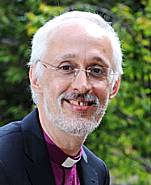
Believing in Evidence

Sermon by Bp. David Walker (visitor) at the North American SOSc retreat, 2014

Nine months ago I was summoned to be interviewed for the post of Bishop of Manchester. It was quite an exercise. First I had to preach for five minutes on the readings of the day. Next I was required to produce a ten minute presentation on a subject chosen by the panel; which happened to be the theology of William Temple and its relevance for Manchester today. Finally, I was submitted to an hour of questions from sixteen people arranged in a large horseshoe. A few days later, by which stage I had been told informally that I was the preferred candidate, I bumped into one of the bishops who had been part of the panel. “You’re different from the rest of us, David” he said. “You really believe in evidence”. It’s possibly one of the nicest things anyone has ever said to me. And I think he did intend it as a compliment.

I also think that it’s a particularly appropriate compliment to pay to the Visitor of this society, because as ordained scientists, the members of SoSc are called to be people who weigh evidence and, along with that evidence and powerfully influenced by it, believe. So let me simply, for all of us here today and especially for those to be admitted to the society, offer some thoughts on what it may mean to be those who “believe in evidence”.

Painting with a full palette

The definition of an expert, as I imagine you are all aware, is that it is somebody who knows almost everything about almost nothing. Specialisation, particularly in science, leads to ever finer divisions into fields that can become so arcane as to be impossible even to state to an outsider. At the turn of the twentieth century, the great David Hilbert listed the top ten unsolved mathematical problems of the day. By and large they were all at least explicable in language an educated non specialist could understand: Fermat’s last theorem and the four colour problem being perhaps the best known. My recollection is that just one remains unsolved. Yet when another nine were added to it to create a top ten for the new millennium, most of them require a considerable amount of prior mathematical specialisation to even begin to understand what the problem means. The days of the generalist scientist, of whom so many were ordained, are long past.

Yet within this ever increasing specialisation are two countervailing forces. Firstly, we can note a dawning awareness that often the solutions to problems couched in the language of one particular field lie at least partially in another area of study entirely. The paradox is that to be fully effective within it, researchers need to engage outside their immediate zone of expertise. Secondly, once we pull back from the frontiers of knowledge and seek to live coherently within the world, we are immediately compelled to construct our attitudes and activities from theory and evidence drawn from many different disciplines.

For you and me there is a very sound reason for applauding this. When we read the gospels we see immediately how, for example, Jesus brings together deep knowledge of the Jewish scriptures, profound observation of nature, acute understanding of human psychology, all in order to address a specific subject. To the people who heard him it would appear to be this ability to synthesise that rooted his teaching in a holistic reality and gave it an authority that contrasted with that of his contemporaries.

The call to us then is to be like the good rabbi of whom Jesus speaks, who can bring out and put together the old and the new. It is to be those who are prepared to paint with the whole available palette of human wisdom. In particular, as a society we have the locus to offer our shared theological training and our very diverse scientific disciplines in order to address the issues of the day. And I do believe this takes us beyond the initial vision of our founders. We are more than a third force in a fruitless culture war between fundamentalist belief and reductionist science. We are a society of those who can individually and corporately make a powerful contribution in the public square. And whilst it is always a little invidious to single any of our members out, for the sake of examples (always important to a scientist) I would draw attention to the writing on environmental issues of David Atkinson, of Lee Rayfield on issues in medical

ethics, and the collection of essays on human sexuality submitted as evidence to the Church of England’s recently published report on the topic. In each case it is the ability to speak from a solid theological and scientific grounding, a belief in the evidence drawn from both, that makes the impact.

The measure of doubt

I was privileged as a young undergraduate to be on friendly terms with a then elderly philosopher, among whose claims to fame was that in his rooms at college a fierce debate had once taken place on the subject of belief and evidence. He described vividly the moment, late in the evening, when Popper refused to accept the existence of the fire poker and Wittgenstein threatened to strike him with it.

I am always amazed at the mental gymnastics employed by some atheist friends in the scientific world who spend their lives not believing they have any free will and yet act constantly as though they did. Those with a sense of humour smile and say they have no choice in the matter. I am equally amazed at those religious fundamentalists for whom it seems to be precisely that their beliefs clash with the entirety of the evidence available and require equally implausible mental gymnastics such as imagining God creating the fossil record to fool us, which attracts them to their faith.

You and I are called to have evidence and to believe. Just as there are different standards of proof for a criminal trial and a civil lawsuit, so we are required to weigh the evidence and determine what an appropriate threshold for belief might be in any particular instance. As in the legal example, an important factor is what the practical consequences of belief or disbelief might be. We need to be far more sure before sentencing someone to years in prison than we need to be before deciding which of two protagonists to believe in a dispute over a commercial contract.

You and I, trained in the scientific method, do not believe lightly. The fact that we believe, and believe enough to base our lives on acting in accordance with our beliefs, stands witness to the plausibility of our faith under challenge. Especially it witnesses to the enduring plausibility of faith under scientific challenge. Faith asserts that we must all live by unproven hypotheses, but hypotheses that remain reasonable in the light of all we know.

Worshiping through the wonderful

For my final point I want to go back to the impact on us of being those who grapple with scientific evidence.

The story is told of two astronomers at a Cambridge college who, every time they felt they were thinking too highly of themselves, would go out into the main court at night, look up at the stars, recite a litany of how small humans are in comparison with the visible universe, and then return duly humbled to their port and Stilton.

Whatever our individual disciplines, whether we study the very large or the very small, the very concrete or the very abstract, we are those who have been privileged to glimpse something more than most people can of the sheer size and complexity of the universe. Like those college dons we are drawn to a profound humility. What then distinguishes us from them though is that as “believers in evidence” we are also drawn into a profound wonder that expresses itself in worship. Like Job, at the end of the book which bears his name, we see the glory of creation, and fall on our knees.

Yet what distinguishes the members of this society even further is that we are also those set apart to be leaders of worship among communities who are not scientifically trained or scientific practitioners. In our society liturgies we express a more profound engagement with the creation than is common in standard church services. That is right and proper. But I hope we can also take something of the spirit of worshipping through the wonderful back into our home churches. I’ve witnessed too many Christian communities for whom worship is about escape from the realities of daily life. For those who experience

daily living as oppressive and rejecting, that is to some extent understandable. But how much better it would be to enable them to worship in a way that by its very connectedness with creation calls up a more profound awareness of a God who is so greater than their oppressors that in his strength they can refuse to accept their oppression. Maybe that is a work for this society, and especially for those being admitted

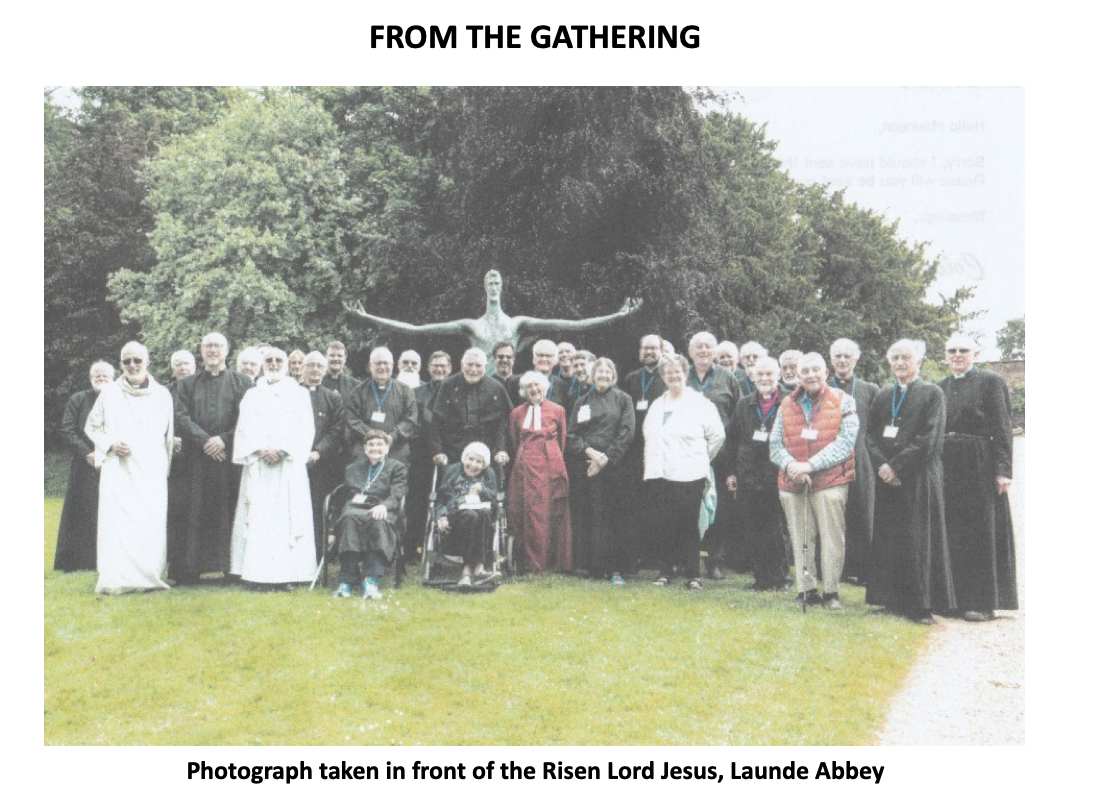
Annual Gathering 2024

18th June to 20th June 2024

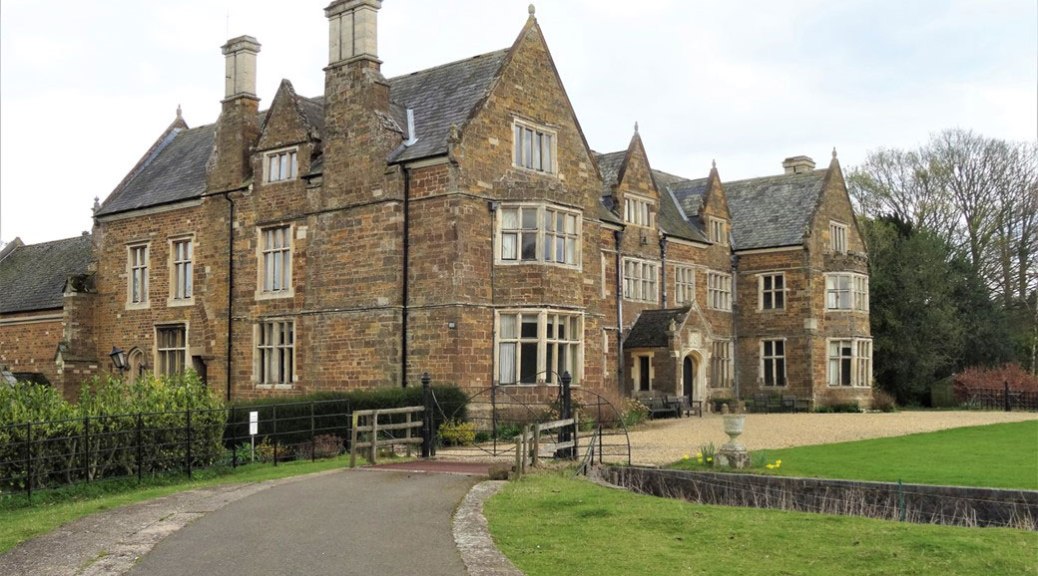
Launde Abbey, Launde Road, Launde, Leicestershire, LE7 9XB

Speaker: Nicholas Spencer. Nick is Senior Fellow at Theos

Nick Spencer is the author of a number of books and reports, including ‘Magisteria: the entangled histories of science and religion’ (Oneworld, 2023), The Political Samaritan: how power hijacked a parable (Bloomsbury, 2017), The Evolution of the West (SPCK, 2016) and Atheists: The Origin of the Species (Bloomsbury, 2014). He is host of the podcast Reading Our Times. Outside of Theos, Nick is Visiting Research Fellow at the Faiths and Civil Society Unit, Goldsmiths, University of London and a Fellow of the International Society for Science and Religion. He tweets @theosnick