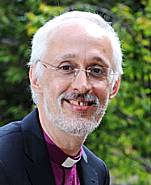
Sermon for the Admissions Eucharist, Dr David Walker
Bishop of Manchester and Visitor to the Society
Society of Ordained Scientists, Retreat, Richmond, VA, 2018
As most of you know, I’m not a proper scientist, I’m a mathematician who dabbles a bit in statistics. But on the plane coming across to the US I was reading a report on a survey of 3000 scientists in the UK, France and Germany, that was examining the evidence for the popular belief that science and religion are at war.
These three European countries (assuming I’m still allowed to consider the UK as European until Brexit) would all be classified as at the secular end of the scale. Yet what was interesting was that only a quarter identified as atheists, and around half claimed to be religious or spiritual in some way. Only a minority among the atheists believed science and religion are opposed. and quite a small minority of them saw science and the broader notion of spirituality as being in conflict. Particularly interesting was that atheism scores were lower for those who had higher scientific qualifications, doctorates for example. The high profile, high performing, anti-religious polemicist could well be categorized as an endangered species. I was pondering that we should maybe set up sanctuaries for them in places that would minimize contact with the outside world. But I’m not sure sanctuary is a word they could cope with.
Anyway, none of these findings imply that we should simply assume the argument to have been won, endangered species are always worth studying. But maybe it suggests that the force of our efforts should and could lie elsewhere. Let me offer you three challenges, or opportunities, that arise from these Ipsos-Mori research findings, one for each of the three main non-atheist groups. Some of you are probably already doing a lot of this.
Strengthening the faithful
- Being visible in a society where religion is treated as private. Physically visible, visible in the cyber world, visible in magazines, journals etc. Housing example.
- Sermons and liturgies that take science seriously – maybe special events to appeal to those who don’t want a weekly habit.
- Finding people things to do. How can a faithful scientist grow their faith through practical action or engagements? Faith, like a bodily muscle, grows when you exercise it. Give it nothing to do and it will slowly atrophy.
- Helping people articulate what they believe and how it relates to their science –
- De-compartmentalizing, to use some of the language we have been working with this
week. - Scientists in Congregations event at Manchester Cathedral this coming Tuesday.
Encouraging the spiritual
- Offering a spirituality that goes beyond the individual’s private experience.
- Awe and wonder at the natural world as shared phenomena.
- Opening up the mystical traditions of faith. It’s not primarily about dogma.
- Quest religiosity.
- Building that inhabitable house that Stig has referred to in our conversations. For some people the Chapel is there in the basement, alongside the foundations, for others it’s on the roof, the final element to be put in place. Spirituality can lead to belief as well as the other way round.
- I not sure there has been enough exploration of what a good science informed spirituality looks like. The Western tendency to look for spirituality in pre-scientific societies may not be a help.
- Turning spiritual values into practical action.
Engaging the undecided
- Opening the mind through meditation. Conversation with senior BBC director.
- Ethics – paralleling the responsible shareholder movement, what is responsible
science? Too often ethics seems to be a box to be ticked when getting a research proposal through the maze of university protocols. The Ethics Committee is one more hurdle to jump, and once you’ve cleared it you can forget it. What does it mean to take a responsible, ethical approach at every stage of the scientific process? - Enjoying uncertainty together – the Quest dimension of religiosity. It’s ok to have doubt, it’s even better to enjoy doubt and uncertainty, especially when they become the energy to explore further. Not to reach certainties but to find some even more exciting doubts to profess.
I’ve couched this in response to a survey about professional scientists, but I would hope that it’s more widely applicable to engaging with the scientific mind and spirit in general.
Each of us can pick at least one to focus on for this new year. To help the religious, the spiritual, or the agnostic. And not to waste energy throwing food to the polemicists in their protected enclosures.

