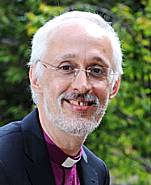
Sermon from Dr. David Walker,
Bishop of Manchester and Visitor to the Society
Society of Ordained Scientists, Gathering, UK, 2018
I’m very much in “proud dad” mode at the moment. A few days ago, my daughter got the final results from her university exams; she will shortly graduate from Exeter with a First in Biology. Within hours she had started job hunting for research based work. Half my age, she now uses statistical modelling techniques that blow my own achievements completely out of the water. What fascinates her, and where she hopes to make a career in scientific research, is how species and their Ecosystems respond to changes in the wider environment. She’s come a long way from simply protesting about the dangers of climate change, to wanting to understand where the risks lie, and what opportunities we have to do something about them. Her science, like much of the scientific task, is about how, where and why things change.
Theology can present itself as almost the very opposite discipline. It can be characterised as being primarily about delving deeper into the unchanging truths that lie at the heart of faith. The previous Bishop of London famously, but jokingly, said, ” You want change? Don’t you think things are bad enough already?” So I believe, that one of the gifts those with both a scientific and theological training can bring to the latter, is a willingness to engage with change creatively and positively. A generation or two ago, the Process Theology championed by the likes of Whitehead and Norman Pittenger (who I knew in my Cambridge undergraduate days) sought to do just that. By I suspect there’s a new task, for a current generation of thinkers, which may build on different foundations. Indeed, it would be wonderfully ironic if the only way to think about change was the way that earlier generations had developed.
So let me suggest three areas where a scientist’s willingness to engage with change might impact for good on our theology.
Liturgy and Change
Leading a church that contained charismatics and traditional Anglicans. It’s not whether you have both change and stability, it’s about where you locate them, eg hymns or liturgy. Most of us find other people’s preferred places of change and stability at best odd, at worst disturbing.
How far can we do change in our liturgy so that it helps us cope with change in wider life rather than being an impediment? Can change done well in liturgy help. Or is it better to make liturgy the locus of the deeply fixed?
Division 2 performances in a Premier League world.
How do new arrivals in our churches cope with the fact we do some things not that well? What can we change in order not to look like we don’t really care very much about our God?
Evangelism and Change
What does commitment to Christ mean in a society where the notion of commitment has changed hugely in a lifespan?
A society where for most there is no permanent career, life partners are changed, and we love in communities that don’t look like what we joined.
What do we do when a gospel rooted in God’s face to face engagement with humanity in Christ, confronts a society where proximity and presence is overtaken by social media?
What does salvation mean in a world that has lost a sense of sin? And where church pronouncements about morals are seen as toxic to our brand?
Pastoral Care and change
Has the home become a place of privacy not of gathering and welcoming? Can home visits still work beyond the Elderly?
Can home groups survive?
Can pastoral care still be an appealing prospect in a society struggling with the safeguarding agenda?
What is the role of the vicar or lay visitor in a context of highly professionalised interventions for our wellbeing?
Concluding Remarks
I don’t believe that change is ultimately a threat to the propagation and practice of the Christian Faith. I do believe that failing to grapple with the nature of change is the real threat.
I also believe that we inhabit church structures that were built more to sustain stability than to engage creatively with change. A church more Benedictine than Franciscan.
But I am an inveterate Franciscan. And I believe those of us with scientific know how can help the church to find the right responses to the big questions around change that face us.
Amen.

