Tag Archives: David Walker

Facts and Comments


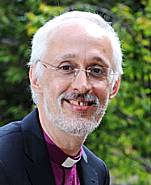
Sermon notes for the Admissions Eucharist from Dr. David Walker,
Bishop of Manchester and Visitor to the Society
Society of Ordained Scientists, Gathering
, Launde Abbey, UK, Summer 2024

“Facts are sacred”, wrote CP Scott, long time editor of what I still like to refer to as the Manchester Guardian. “But”, he added, “comment is free”. Having been subject to the on-line reaction when I’ve written for Scott’s former paper, I can testify that those submitting comments exhibit no lack of freedom, or indeed any other inhibition that one might expect common courtesy or decency to place upon them. Scott made it a hallmark of his editorship not to confuse these two.
One of my own media sidelines is to be part of the team of presenters who bring listeners Radio 4’s Thought for the Day from Monday to Saturday, at around 0745. Because it is an uncontested slot, by which I mean that nobody gets to challenge me on air, or demand right of reply the following day, the rules are very strict. I work alongside a producer drawn from the Religion and Ethics team, who has two principle tasks. The first is to help me get my point across in as clear and concise a way as possible (I have a maximum of 2 minutes and 50 seconds, which amounts to around 450 words). The second is to ensure that, whilst I might range far and wide in the opinions I express, I have a firm evidential base for anything I present as fact. Listen carefully, and you’ll hear us presenters use little phrases like “as I see it”, “in my view”, or “for me”, to bridge the gap between fact and comment.
Science, is an exercise in finding facts, discovering the truths about the world about us. We propose and test hypotheses until we have confirmed them to a high level of probability. We can then treat them as factual unless and until fresh evidence arrives that makes our earlier conclusions unsafe. In that sense science operates a bit like the criminal court system, where an appeal can be heard if new and compelling evidence emerges. Perhaps the main difference, one for which we are profoundly grateful, is that the findings of which we become convinced and convicted are less likely to result in our being sent to prison. At least in most parts of the world. We may have our opinions on scientific matters, but woe betide any scientist who fails to follow Scott’s dictum when publishing in an academic journal.
Most people, most of the time, operate in a world beyond science, very much on the “comment”| side of Scott’s distinction. It’s a world where opinions and beliefs do not have to be quite so securely grounded in hard evidence, nor demonstrated beyond reasonable doubt. We don’t need a logical basis for preferring the work of one artist to another, or liking different types of music. We don’t need incontrovertible evidence to justify thinking one football team to be better than another, nor to form a view as to which political party is best placed to lead our country over the next few years. The problem comes when Scott’s boundaries get blurred, particularly if done so with intent.
Politicians are, I suspect, particularly inclined to overstep the boundaries between fact and comment. And it can’t help that most of them come from non-scientific backgrounds, where such behaviour is more acceptable. Here in the UK, the first main skirmish of the current campaign came when the Conservatives tried to package as factual, estimates of Labour’s tax policies that had been drawn up on the basis of assumptions chosen by Tory advisors. “Garbage in, garbage out” as we said in the earlier days of computers. And yet, even though the Civil Service moved swiftly to rubbish the figures, they are still being trotted out as though they had a sound factual basis. Indeed Labour have largely given up on refuting the allegations, in favour of presenting their own dodgy data instead.
As both scientists and ministers of religion, we in this Society are in a good position to understand both hard evidence driven facts and matters of opinion. The same evidence of the world around us can, and does, lead us to quite different theological conclusions. So how do we maintain clarity as to which side of Scott’s boundary we are standing on?
Well, one of the things I have learned from almost a quarter century of being a bishop, is how important it is for me not only to understand the perspectives of people whose opinions are very different from my own, but to be able to argue their case along the lines that they would argue it themselves. People really appreciate being understood, and their opinions respected, even when they are not agreed with. Yet where I find I have to resist is when I am asked to give equal space and respect to arguments that play fast and loose with the facts. Or where clear and demonstrable facts are denied because they fail to support the opinion someone wishes to maintain.
So, one of the things that grieves me most in an election campaign is when interviewers treat false facts with the same respect that they properly offer to diverse opinions. I still shudder at the comment of a former, and possibly future, US President who, confronted with the falsity of his statements, spoke simply of having “alternative truths”.
“Facts are sacred”, said Scott. Most of the time, in that sentence, the emphasis is placed on the first word. But we, above all others, should understand what that final word “sacred” means. It goes beyond saying “treat with respect”. To be sacred is to be precious to God. We follow the God of truth, the God to whom truth matters. We need to treat facts with the same reverence as we treat other sacred objects or entities; to recognise that they might form the basis for comment and opinion, but can never be collapsed into them. And maybe, our dual training, as scientists and theologians can help us do that, both for our own benefit and the benefit of our congregations and communities.
Through a glass, darkly….


Warden’s Address from Stig Graham,
Warden of the Society
Society of Ordained Scientists, Gathering
, Launde Abbey, UK, 2024
Ezra 9.1-4; 1 Corinthians 13; John 10.14

I have said this before I know, so apologies, but there are times when I do enjoy, even prefer, the King James Version. The words and cadence resonate easily on the tongue, and on the heart. Some of my other recent reading has resulted in the phrase, ‘through a glass, darkly’, coming to mind frequently. But, in true self-referential mode, in the world of Hebrew translation, even that phrase seems to yield its own confusion and debate, with particular heat about the presence or absence of a comma following glass and preceding darkly. But then, perhaps punctuation is the putative dark matter to be found, or not, in ancient Hebrew texts. Certainly, papers are written on its non-existence.
There are times when I am quite happy with the Ptolemaic system. There are times when even that is too complicated. It’s not necessary to worry where the sun goes, and whether it’s the same one coming up each morning. On a sunny day, and any time of the year, one swift glance at the sky – and the time, and the direction to base camp, can be deduced, which satisfies all I need to know, not to mention my Vitamin D requirements.
And as we progress through the year, one can go Copernican, and reflect on the earth tilted on its axis relative to its orbital plane around the sun. And don’t tell anyone, as my children’s astronomy books did, that the earth wobbles. What makes it wobble? And no one could tell me. Until the penny dropped that it didn’t wobble, it’s just tilted.
What cause the ‘darkly’: the glass itself or the eyes trying to see through it.
And further again, with a spacetime continuum, and three dimensional gravity wells, not just the two they always draw in text books, and time slowing down and speeding up, and, yes, it’s not as dark as it could be, I can just about see through it, and then someone says, but you realise that this is a three dimensional projection within a four dimensional bubble, and my brain begins to shut down, and someone else says, but it’s all a digital simulation anyway, and can I have some NASA funding to test the hypothesis, and now my brain is modelling a black hole, and not only is the glass dark, even the glass, or the event horizon, seems to have vanished.
And then I read Nick Spencer’s book, Magisteria. To be clear, Nick’s book is clear sighted, illuminating so much of the entwined history of science and Christian faith and, for me at least, making sense of it. And without using the word wobble at all. Though my heart did wobble as Nick’s laid bare of the role of science in the eugenics movement, which provided clear evidence, objective, empirical, and statistically demonstrated, that all men are not equals. It must have been gratifying for them to find the most elite humans of all, physically, mentally, morally, were men just like themselves, white, well educated, middle class or higher, financially sound, respected by men just like themselves. Self reference is a dangerous tool.
In so many areas of life we are still trying to recover from that perspective, that arrogance. It still pervades our modern society. For once, however, it was the Church who challenged the scientists, saying, no, in God’s eyes, we are all God ‘s children and we are all equal in God’s eyes. Or to use an alternative more modern translation, translation, in a ‘we see a reflection in a mirror’, does the mirror distort my image, or do my eyes, or my interpretation.
And then I read Ed Yong’s book, An Immense World, in which he explores the many and diverse ways that animals of all kinds sense, are aware of, the environment around them, their umwelt. History repeats itself as human scientists, with a literal and metaphorical limited vision, peer darkly at the living creatures around them. For so many years animal senses have been dismissed and diminished.
So, contrary to previous writings, dogs are not colour blind, can see well in the red, blue and ultraviolet parts of the spectrum. They may not have a colour palette as nuanced as humans, having only two kinds of colour sensitive cells whereas we, mostly, have three. But before the males among us applaud ourselves, it has been found some women have four. But even that is no great feat, as many animals have several more and the mantis shrimp has twelve, sixteen counting the ones that see polarised light, and can swivel its eyes in any direction, and independently too.
Darkly, it is so easy to turn the wonder of senses into a simplistic competition, when what really matters is what helps as species to survive and prosper. And as for vision, here is a quote from Yong, “The real glory of colours isn’t that some can see more of them, but that there’s such a range of possible rainbows”
The Books of Ezra and Nehemia pose an interesting challenge for us. Who belongs in the kingdom of God they are building. A very limited gene pool. It certainly did not include the Samaritans and other local tribes, those who had been left behind. Divided off and then discarded. But are they right? A purity of vision and purpose? Clear sharp dividing lines. A purity of people who are themselves pure and purposeful. In their context, they achieved a lot. But did it include enough rainbows. Was it just a monochromatic rainbow? Oh, for a prism, a very special glass, when you need one.
We have had our own ongoing challenges since our inception as ordained scientists. What constitutes ordination? What defines scientist? Where do we draw our lines?
As scientists and disciples of Jesus of Nazareth, we continue to be surprised and sometimes disturbed at how inclusive and interdependent God’s creation keeps turning out to be. People often ask whether they will be with their pets once again in heaven. I recently asked a spirituality group whether the assorted bacteria, mites, and assorted invertebrates we carry within and about us would enter the gates of heaven, especially the ones that contribute to our wellbeing, even survival. Soteriologically speaking, do we share an umwelt?
Jesus just by his existence would have turned Ezra and Nehemia’s world upside down. Pentecost would have pulled it inside out. The outsiders are now inside. What happened to the gates? Who is this gatekeeper? Other flocks, other pens, other I’s.
God said let there be light. And light filled the universe. Is my ‘darkly’ my lack of ability or am I just squinting, half closing my eyes, trying not to be overwhelmed by the abundance and plurality of God’s rainbows.

Morsels to Chew On


Sermon notes for the Admissions Eucharist from Dr. David Walker,
Bishop of Manchester and Visitor to the Society
Society of Ordained Scientists, Gathering
, Hinsley Hall, UK, Summer 2023

I like to use these slots to offer some reflections on issues that seem to lie in the territory where we need both good science and good religion in order to make progress. And hence where we as a Society may have a particular contribution to make. It’s also a chance for me to reflect on my own engagement in that overlap, so expect to hear a bit later about the Science, Faith and Fiction event at the Science Museum in London, which Lucas and I were both at last week.

So here are three morsels to chew on.

What is special about humans?

A few years ago, the BBC invited me to do a spoof piece for their Sunday programme, based on the conceit that robots were to be deployed to replace clergy.

[visit to MUSI, Lord’s Prayer, perfect pastoral listeners – never get tired of hearing the same stories from parishioners, infinitely patient with recalcitrant church members, no danger of stealing funeral fees or running off with a member of the congregation] [ended with, asserting that bishops were safe from such replacement, as somebody had to oversee the robots, but that archdeacons had already been robotised some years earlier, and nobody had noticed]

With all the hype about AI this year, I’m wondering whether my proposals were far too modest. [Sue using ChatGPT to provide a first draft of intercessions – cut down time by half] Emma coding.

Don’t intend to focus specially on that software, but to use it to ask the question:

What does it mean to be human? What can humans do that is not replicable or replaceable?

What is special about being physically present?

Some of the hype about virtual reality feels a little last year, Meta is still more a brand than an actuality (perhaps that itself is a metaphor) but I’m sure it will come back again as the tech experience improves.

Zoom etc over Covid. Involving people in our event virtually.

Note drop in attendance including NA. Note Ivan.

Keep coming back to this issue in various aspects of church life. Is this another area where the mission strategy and financial strategy pull in opposite directions?

What is special about the prophecies we tell?

Science fiction exhibition. Instant stories.

What is prophecy?

What prophecies link Science and faith?

Changes


Warden’s Address from Stig Graham,
Warden of the Society
Society of Ordained Scientists, Gathering
, Hinsley Hall, UK, 2023
2 Corinthians 3.3-end – 4.1-6, Matthew 5.17-26

I came across a new phrase last year – or at leaThere are times when I miss the King James Version, when I want the old ways back.
‘18 For assuredly, I say to you, till heaven and earth pass away, one jot or one tittle will by no means pass from the law till all is fulfilled.’ Catch me unprepared and I might struggle to tell you what the difference is between them, but I know what I like, and I miss my jot and tittle. But it’s not just the words themselves, it’s the rhythm and the cadence of the King James and the BCP. But there is an irony that a tittle was a small pen stroke which could be used in Medieval Latin to indicate missing letters in order to abbreviate a word – so, yes, things could be changed if it made life more convenient.
Change is always difficult. The traditional version of the Lord’s Prayer is, in my experience, still the preferred version at funerals. On a larger scale, the recent shenanigans at General Synod here in the UK in the debate on Living in Love and Faith showed how challenging doctrinal change can be. There was genuine and great distress displayed by speaker after speaker insisting their lives would be wasted and their faith destroyed if the rules were changed, and also if the rules were not changed, and a sizeable group whose distress lay in trying to hold the family together in the face of vitriolic accusations being hurled back and forth.
And yet, throughout the Bible, in Old Testament times, there were massive changes: the transition from being a nomadic people to a settled agrarian nation required new laws, the switch of power from judges and prophets to kings was no small step theologically and legally. And however difficult our teenagers might be I don’t imagine any parent seriously wanting to take our obstreperous teenage children outside the city gates and stoning them to death.
In New Testament times, the food laws were changed thanks to one man’s vision, the rules on circumcision after much dithering were modified or forgotten, and holding all our wealth and goods in common never really took off.
Since then, through to modern times, there have been volte face moments. Some have happened without fuss, the recent removal of purgatory, and usury, despite being very biblical and clearly sinful, being permitted and even encouraged. In ancient times, the lending of money at any rate of interest was considered heinous, (though I presume that only positive rates were intended). Convenience counts.
Thankfully, this is not true of science. As my Humanist friends tell me, ‘I believe in Science’, and ‘The data doesn’t lie.’ Most of us here would agree, I imagine, with the first statement but how many of us shuffle our feet at the second. All of us would subscribe, I imagine, to the idealised version of Science, and the application of reason and observation in understanding the visible and invisible universe. But equally as many of us would acknowledge that Science is frequently let down by the behaviour of the scientists as humans, as sinners, falling short of the required ideal behaviours. The data may not lie, but it can be very dependent on which data was collected, which selected, and when, and by whom, and who was paying for it.
The history of science is replete with examples of reluctance to change neither jot nor tittle of orthodox thinking. Ph.D. students being advised, if they want a career in science, not to pursue a particular approach, avoid an area that is politically contentious, might conflict with sources of generous funding. It would be generally inconvenient. Or when it is written, the energy with which both the paper and the author are attacked and even mocked and ridiculed.
Galileo ran into problems not so much for challenging the Church as challenging the dominant Aristotelian academics. Nor is it only impolite argument. The Spirit gives life but the word can kill. Ignatz Semmelweis died in 1865 in very suspicious circumstances, having called his medical colleagues ‘irresponsible murderers’ for not washing their hands between patients. Other scientists have died by their own hand. Richard Altman, the discoverer of mitochondria, killed himself because of the negative and harsh response to his work.1
There are, and have been, more recent examples, across many fields, cosmology, climate change, genetics, gender studies, right up to the present day. Just a few years

ago, The World Health Organisation started a programme of vaccinating children in the Philippines against dengue fever. Doctors on the ground realised that though beneficial for many, a substantial minority of children were later even more ill than ever and even dying. Persuading the government and the World Health Organisation to stop the programme was a monumental task. Ironically, ethically, this still leaves me with a dilemma – with whom do I share this story? In world where the value and efficacy of vaccination is being dismissed and not taken up, should I be sharing stories that show that science can get it wrong, especially if the takeaway is just simply, ‘Don’t trust vaccinations’. Or is that a convenient excuse on my part?
Jesus is notorious for challenging conventional beliefs, both in his day and still here and now in ours. Not just in the wider world, but even within Christian communities, we struggle to implement his teachings, to be open, loving, receptive to different ways of expressing different ways of being, thinking and feeling. We still have structures which say – to belong you must agree, you must be like us, you must conform.
When reading the gospels, I am always struck by the number of people who walk away saying, ‘No, this teaching is too hard’, even with Jesus in front of them.
And yet the teaching is ultimately a simple one. Jesus clearly doesn’t think in terms of jots and tittles when he summarises the Law, ‘Love God, love your neighbour as yourself’, and by way of example, ‘Love one another as I have loved you’. Whether you come via the roof or the door, you are welcome here.
Or as some scientists have suggested – in science, we really could be a lot kinder to one another’.

A Scientific Experiment in Antiquity


Sermon for the Admissions Eucharist from Dr. David Walker,
Bishop of Manchester and Visitor to the Society
Society of Ordained Scientists, Gathering
, Launde, UK, Summer 2022

I love being a minister in a church that has a set lectionary for every day. Not only does it save me from having to pick passages from which to preach, it offers me opportunities I would never have grasped. So, here today, as we meet to admit a new member and reaffirm the vows of existing Ordained Scientists, we have, in our Old Testament passage (1 Kings 18: 20-39) an account of one the most rigorously executed scientific experiments in antiquity. So let’s have a look at how it might help us today.
Elijah sets out with a clear hypothesis – that the God of Israel is supreme and Baal is nothing. He makes every possible concession to allow his hypothesis to be disproved – giving his adversaries plenty of time, dousing his own offering three times in water – before finally proving his proposition. You can imagine it set out, not as a passage of scripture, but as an article for a modern peer reviewed journal. My only quibble with his scientific method is that, in having his enemies seized and killed (in a final verse the lectionary chooses to omit), he has perhaps taken the task of cleaning up the laboratory afterwards, to excess. Of course, those were the days before Ethics Committees pored in such detail over every aspect of even the simplest research proposal.

INTEGRITY IN EXPERIMENTS

Elijah, of course, has a lot invested in the success of his endeavours. Had his adversaries succeeded, or had he failed, he would have been the one seized by the crowd and destroyed. And yet he is meticulous in doing nothing that might lead to accusations that he has rigged the experiment in his favour. Over the last five years, I’ve become increasingly involved in supporting those living in high and medium rise buildings affected by the cladding scandal. Many of them are living in fear of both fire and the financial ruin they will suffer in seeking to rectify the mistakes of developers and freeholders. Back in March I was able to take Archbishop Justin on a visit to meet residents of one particular city centre block in Manchester. From the balcony of one apartment they listed the costs in millions it would take for each of the blocks we could see to be made safe enough for their homes to be capable of attracting a mortgage again. As the Grenfell Inquiry has discovered, many unsuitable materials found their ways into the fabric of people’s homes because the tests for combustibility were rigged; fully real world conditions were not simulated. In a parallel case, at least one major motor manufacturer has been found to have installed test cheating software into their systems. To move to yet another sector, pharmaceutical companies are regularly accused of hiding unhelpful research findings that might destroy the potential of a drug they have spent significant sums in developing.
Central to our calling, as Ordained Scientists, is that science must be honest. No matter what the positive or negative consequences, be they commercial, reputational, or career damaging, the integrity of the research process must be paramount. Every falsified experiment not only damages its own hypothesis, it undermines the entire scientific exercise. In my most suspicious moments, I have wondered whether the water Elijah threw over the wood might have actually been highly distilled, and readily combustible, alcohol, but I doubt it. It’s a fair experiment, as experiments should be. Over 2500 years on, our own engagement with God’s creation is too precious to let us collude with anything less than full integrity in our research processes and practices.

EXPERIMENTING WITH GOD

Arguably, one of the oldest ethical restrictions for any experiment is issued by Jesus himself. When he’s challenged by Satan to throw himself from the pinnacle of the temple, he memorably responds “You shall not put the Lord your God to the test”. At first glance, that might seem to be a rejection of what Elijah did, in proving God’s power to the Israelites. But the two are actually almost direct opposites of each other. Elijah’s experiment offers space in which God can choose to act; Satan seeks to deny God space, to force him either to intervene or to see Jesus’s ministry destroyed at the very outset. If Satan can force God’s hand, then he can lay claim to be God’s equal or greater. Having failed here to get Jesus to collude with his experiment, he retreats, only to return later and
seek to force God a second time, this time in the baying voices of those on Good who shout for Jesus to prove himself by calling on angels to bring him down, unharmed, from the cross.
By contrast Elijah performs an experiment that allows God to show his power, if he so wills. God remains supreme.
The scientific endeavour, in all its fields, is, at its very best, an exploration of the wonders of God’s creation. It should evoke, both in those who engage in it and those who simply receive their results and discoveries, a sense of awe that is only a short step (if even that) away from worship. Far from confining God into ever smaller gaps in our human knowledge, science reveals the ever increasing complexity and beauty of all that his hand has created, from the delicate interplay between universal physical constants that makes complex molecules and hence life forms possible, to the gentle pressure of evolutionary forces, moulding life into multiplicity. St Francis (you wouldn’t expect me to complete a sermon without at least one reference to him) loved every aspect of God’s creation, even death itself, because in all of it he saw the handiwork of his creator and redeemer. Our role as ordained scientists is not simply to do science, but to exult in it, something we see the very best public presenters of science do on TV. Our response should be at the level of our passions and emotions as well as our intellect, so that the world can catch a glimpse of the glory of God in our endeavours.
Elijah’s successful experiment doesn’t bring his troubles to an end. Only a few verses later he is once more fleeing for his life, with Jezebel, her mind closed to any event that doesn’t fit her own faith, having vowed to destroy him. But whatever troubles he has yet to face, his journey deeper into God goes on, first to encounter his Lord in the still small voice on Mount Horeb, and eventually to be taken up to heaven in a fiery chariot. Our own journeys may not contain quite such explicit theophanies, but they play their part, and do so to the glory of God. Amen.

Closing the Loop


Warden’s Address from Stig Graham,
Warden of the Society
Society of Ordained Scientists, Gathering
, UK, 2022

I came across a new phrase last year – or at least a new understanding of an older one ‘closing the loop’. An astronomer was talking about, and I quote, the ‘magical moment’ as a blurred and indecipherable on-screen image resolves into an exquisitely defined picture of a planet, a star or a far away galaxy.
Is it really so amazing though? After all, the CSI franchise, amongst many Hollywood others, has been processing a photograph of a speeding car on a foggy night half a mile away to reveal in pristine condition the number plate of the car and thereby the identity of the culprit for several decades now.
Well, yes, it really is amazing. But much more than that, the real joy, the sense of the magical is coupled with a deep understanding of how it happened: the powerful, fast computers involved, the array of algorithms aligning and controlling a bundle of hardware and software to a minute degree, and ultimately producing, not just data and knowledge, but sometimes something beautiful and unexpected.
Closing the loop is that moment when all comes together, the work, the study, the careful preparation, and from fuzziness emerges clarity, of vision and of understanding.
Closing the loop also reminds me of another scientific descriptive phrase which has illuminated my life and practice: ‘Collapsing the wave front’. I did actually look this up to see how it is presently defined. ‘
In quantum mechanics, wave function collapse occurs when a wave function—initially in a superposition of several eigenstates—reduces to a single eigenstate due to interaction with the external world. This interaction is called an “observation”’.
What a wonderfully laconic afterthought. This interaction is called an
“observation”’. The infinite possibilities of quantum mechanics meet the reality of the one-eyed observer. Shades of Van Moltke’s observation that ‘No plan survives contact with the enemy’. All the planning, the myriad possibilities formulated, considered and adjusted for, but in the moment of contact, a decision, perhaps a decision without alternatives, must be made.
For me, both phrases share a sense of approaching a moment, a cusp point, when we can hold, and contemplate, our discovery. And yet, the other hand, one brings all things together into something greater that its parts, whereas the other reduces all those possibilities together into one outcome. And reducing is not always a bad thing, that is how we make delicious stocks for thing, and, as scientists we do reassure one another, occasionally comfort one another, that a negative result is also positive outcome.
Balaam, Paul and the blind man at Bethsaida, all encountered new and
different ways of seeing the world, quite literally for one of them. Balaam’s encounter with the angel made it clear that the world was not as he thought it was, not least a talking donkey, and that he should return the way he had come. For Paul, for him too, when he encountered the risen Christ, he understood the world was not the way he thought it was, but the only way was forward and yet, at the same time, on a very different path. For the blind man, it seems rather more ambiguous: his awakening is gradual, coming only slowly into focus, with additional
help from Jesus. And then Jesus tells him to go home and not to go into the village. Oh, so wasn’t his home in the village? I remember as a child worrying over the apparent illogicality of that. The sensible adult within me saying, don’t be silly, be reasonable, but the child still says, ‘Yes, but if he did live in the village . . .’
But now, after this week, I have a new problem to agonize over. Which was the clearest perception – seeing people as trees or people as people. The most obvious answer is people but is there a possibility that seeing trees was an indication of seeing through eyes of knowledge and wisdom, a divine perception perhaps. As we have learned, tree mythology interweaves throughout our Biblical texts. Do we grasp
for understanding as we do for a branch? Did he gain insight only to lose it? Interestingly, the story of the blind man is framed by the disciples not grasping the significance of the feeding of the multitudes with each event producing way more scraps than what they started with and followed by Peter recognising Jesus as the Messiah only for them all to be told, ‘Yes but don’t tell anyone’.
My point being – I do have one – is that such moments do not happen in
isolation. There is always an approach, and an arrival and there are always outcomes, consequences, new plans, new ideas. Whether the recognition involves joy, trepidation, or anxiety, whether we see from our present peak to the new and next summit or realise that the peak upon which we thought we stood has crumbled away.
It may be that our momentous discovery is made on Friday evening, and we have to wait in excitement and isolation for the weekend to end and the new week to arrive, to share our news. But Monday morning, decision time, invariably arrives. Whether we close the loop or collapse the wave front we must move on, forward or backward, or on a new path altogether. Neither science nor faith, personal or corporate, can be static. Nature may or may not abhor a vacuum, but it certainly abhors stasis.

We have gained in knowledge this week. Hopefully, we have gained in wisdom too. As we struggle to make sense (well I struggle and am probably not entirely alone) of such a potent mix of symbols, myths, metaphors, and parables and try to decide where to go next, there is comfort in Jesus’ final instructions to Peter and, consequently, to us. Simple words and yet miraculous too. There are, indeed, lambs
and sheep waiting to be fed and tended, to be cherished and nurtured.

Precarious and Resilient


Dispersal Address from Dr. David Walker,
Bishop of Manchester and Visitor to the Society
Society of Ordained Scientists, Online Gathering
, 2021

Yesterday afternoon, in a slot that sadly overlapped with the start of the second of our sessions that day, I spoke in the UK House of Lords, as part of the legislative process which will lead to a new Environment Act being placed on the statute books. The particular debate I was taking part in, was concerned with plans to require a minimum 10% net gain in biodiversity from planning developments. I had two minutes to link from the theology of creation through examples of how churches are practically promoting biodiversity, not least in churchyards, to end by urging members to amend the Bill to ensure commitments to net gain are adequately funded and not time limited. There’s little point agreeing to a thirty-year biodiversity plan with a landowner, if they can then plough it up and destroy it in year 31.
In both preparing and delivering my speech, I felt the strength of this Society behind me. If this is true for me, who am simply your Visitor, how much more can it be true for the members.
The worship sessions we have shared over these last few days play a vital part in assuring me that God is with us in our care for creation. The Meditations we have heard, have opened my mind even further to see the wonders of life on Earth and strengthened my resolve. When Pan spoke of the catastrophic events that have occurred in the history of this planet, it reminded me that life is both extraordinarily precarious and amazingly resilient. To live on a planet whose age is measured in billions of years, and bears the scars of those ages, is a far more miraculous and awe-inspiring truth than the 6025 or so years that Bishop Graham Usher reminded us his late namesake’s calculations would have it now be. I was sorry to miss most of Roger’s presentation last night, which I know from colleagues was equally inspirational. And indeed to be detained, literally at Her Majesty’s Pleasure this morning, when conversation continued. Jared’s meditation this afternoon helped me get more of a sense of how important is the work that my epigeneticist daughter and her research colleagues at Exeter University do.
Our plenaries and breakout groups have allowed us to explore the ideas presented to us in greater depth. For me at least, it is that close conversation with a handful of colleagues and friends which turns data into understanding, allows me to test my views in a safe and supportive place. whilst, in common with most bishops, I do a lot of talking, I also get talked at quite a lot. And no matter how well presented the arguments, I don’t find I’ve properly processed them until I’ve taken part in some sort of conversation that tests my understanding.
Like many of us, I’ve relished the fact that holding our Gathering online has allowed an ease of participation from members in many time zones. We have saved on costs of time and travel. But we have missed that particular dimension of human engagement that comes from meeting face to face. Some months ago, I compounded the quip, “God so loved the world that he didn’t send a Zoom invitation”. The doctrine of the Incarnation places on Christians, even more than anyone else, a priority to be physically present with one another. To attend to each other at a depth not possible from behind a screen. We above all should be hugely grateful for the science and technology that makes virtual conferencing on this scale available to an extent that less than a decade ago would have been hard to imagine. Like many other bodies, we now need to think hard about how we can blend virtual and physical gatherings together in ways that maximise participation, especially for a community as widely dispersed as SOSc. But I very much hope many of us are able to gather physically next year, in the USA in January and the UK in summer.
Meanwhile, in a few minutes time, our 2021 Gathering will be over, we will press the Leave button on our screens one final time, and return to the demands of our regular labours and routines. Yet we will do so carrying the Society and its members invisibly with us. The events of this week will colour our engagements over the time to come.
For my part, when I go into a debating chamber, especially one as demanding as parliament, and I intend to speak to a further series of amendments on forestry on Monday, I sense myself clothed
with the support of this Society. I know that my concerns for faith and science are not some isolated peculiarity of my own. For me that makes all the difference. Whatever your own equivalent context may be, as you journey back and forward exploring both science and faith, I pray that it may do so for you. May God go with you.

Double Standards


Sermon for the Admissions Eucharist from Dr. David Walker,
Bishop of Manchester and Visitor to the Society
Society of Ordained Scientists, Gathering
, UK, Summer 2020

Jesus offers one of his most characteristic challenges in today’s gospel; he warns his hearers of hypocrisy. It’s a term as likely to be thrown at religious people, especially religious leaders, today as ever it was in Israel 2000 years ago. What’s more recent, is that it is now levelled at scientists as well. And responses to the coronavirus pandemic have highlighted the challenge that all those who work in sectors that give advice (directly or indirectly, moral or health wise) to the public, face.
UK based members of this society will probably be familiar with the fact that scientific advisors to both the Scottish and English governments felt compelled to resign for breaking the very clear guidelines on lockdown they themselves had played a part in drawing up and promoting. One had made visits to a second residence away from her city base, the other had allowed his (married) girlfriend to come and visit him in his home. It isn’t only scientists who have been exposed for flouting the rules, others have too, including some very close to the centre of power, and not all have felt the moral imperative to resign, but enough has been said about that. Society, and the scientific community itself, expect a high standard of integrity from those who are engaged in a form of work that has the search for truth at its very heart. Politicians, and political advisors, may have very different needles, if any, in their moral compass.
As ordained scientists, members of this society bring to questions such as these, both our understanding of the scientific process and our comprehension of wider ethical and moral behaviour. Rather than compartmentalise those twin aspects of our vocations, we hold them close together. Our science informs our understanding of ethics, our theology informs our understating of science. And the interplay between science and ethics reaches much deeper into our practices and our lives than simply the well-worn task of getting approval from the academic Ethics Committee for some particular piece of research.
We will ask ourselves whether it is possible to keep entirely separate professional and personal ethics. Is there no correlation between the two? Or does there come a point when a scientist who has justified themselves in hiding a clandestine relationship will be more likely to justify themselves in suppressing experimental data that does not support their hypothesis? It would seem to me at least a plausible hypothesis that, once the principle that it is right to dissemble in order to protect or promote one’s personal reputation has been conceded, it is a far shorter leap to taking similar steps in order to sustain or enhance ones professional reputation. And, indeed, vice versa. Perhaps one of the ways in which members of this society can serve the scientific community is by being a priestly presence, maintaining the centrality of ethical standards, but doing so with both a pastoral sensitivity and a forgiving demeanour.
Having double standards, is of course only one dimension to hypocrisy. And although he denounces it elsewhere, it’s not actually the reason behind the challenge Jesus issues on this particular occasion. In this passage hypocrisy is more about motive than behaviour.
I love the writings of T. S. Eliot, that most English of twentieth century Americans. In Eliot’s play, Murder in the Cathedral, Archbishop Thomas Beckett is visited by a series of tempters in the time before his murder. Having seen off the first three, Beckett believes his challenges are over, he can now go to his martyrdom with a quiet conscience. And then along comes tempter number four. This one doesn’t seek to dissuade him from going to his death, but rather encourages him with tales of how he will go down in history, his reputation will last far beyond his lifetime, for having stood up to the king and being killed for doing so. Shrines and miracles may follow. Beckett almost yields. But then he sees what is happening. “This”, he cries, “is the greatest treason; to do the right thing, for the wrong reason”. Jesus does not level criticism at his hearers for saying prayers, or for being generous to charity. The hypocrisy lies in their murky motivations. A prayer uttered for the sake of pleasing human hearers, has not in truth been addressed to God. A charitable gift made in order to win praise, has not been offered for the benefit of the recipient but for that of the donor.
One of the complexities scientists face today, is that much research is funded not by impartial philanthropists or academically interested governments, but by commercially motivated organisations or by Trust Funds set up to advance a particular viewpoint. What gets researched, and in what depth is not a purely academic matter. And scientists whose findings are unfavourable to some powerful lobby group or commercial interests may find it harder to access grants and funding. It isn’t hypocrisy to explore new and potentially costly treatments for medical conditions, and to seek to recoup the costs of research from the premium charged for the eventual product. But maybe the line has been crossed when equally promising avenues of treatment for the same condition fail to be explored because they would not generate profit. Or when diseases that almost exclusively affect the poor are neglected because the victims would not be able to pay enough for the research to have been financially worthwhile. Motive matters, and we as ordained scientists might see it as part of our vocation to challenge the hypocrisy of Beckett’s final tempter, when he enters the world of science, no matter how alluring his whisperings.
Over these last few weeks, the pandemic has been joined at the top of my work list by the need to respond, urgently and effectively, to the issues raised by the killing of George Floyd. Many words have been spoken in response to his death, not least by white leaders of organisations including churches. Prayers have been uttered, and photographs taken of prominent figures kneeling in support. I have done those things myself and intend to go on doing them.
Yet we know from previous scandals over the ill treatment of black and other ethnic groups that everything, from the micro-racisms faced by our sisters and brothers every day of their lives, to disproportionate killings by police officers, that once the fuss has died down, we tend to go back to how things were before. Our feelings may have been engaged, our morals outraged by the extreme behaviour of others. For a time it has been less comfortable to ignore the problem than to respond to it. But after a while the needle on the comfort scale, for people like me, all too easily shifts back in favour of the status quo. When we speak out and act out, however genuinely in the moment, but within ourselves knowing that we really want the issue to go away and leave us alone. That too is hypocrisy. Our words and our gestures are devoid of true meaning, they mislead and at worst raise false hopes that will all too soon be dashed again when we revert to business as usual.
Double standards, deceptive motivations, and the mouthing of platitudes, are all, if distinct, forms of hypocrisy. Yet between these thorns grows a rose. And it belongs to none of them.
That we have standards which we fail to live up to, is the common lot of humanity – at least among those who accept the existence of standards at all. St Paul writes, with a degree of convolution that resonates with the problem he is facing, that again and again what his mind tells him he should be doing is not what his body compels him to do. This is no simple dualism, though Paul can get close to that error from time to time. Rather, it is a recognition of the pervasiveness of sin.
Those scientists forced to resign from their roles in the pandemic because they had broken the rules were only being hypocritical if they genuinely believed they were entitled to exceptional treatment. If they were trying to keep the rules but had succumbed to temptation, then they are simply weak human beings like you and like me, deserving of our forgiveness. Such forgiveness does not negate the need for them to face the consequences of their misdeeds, perhaps including resignation, so as not to undermine the advice they had previously given, but it changes the moral landscape significantly.
Many aspects of the societies in which we live that have long been present, are being brought to greater prominence and urgency by the coronavirus crisis.

All Things Considered


Sermon for the Admissions Eucharist from Dr. David Walker,
Bishop of Manchester and Visitor to the Society
Society of Ordained Scientists, Retreat
, Tucson, USA, 10 June 2020

Driving through Tucson a few days ago, we switched on the car radio to listen to the late afternoon news on National Public Radio. The presenter announced the title of the programme as “All things Considered”. I joked to Tom that, given the diversity of opinion in the USA, there was probably a rival station whose drive time broadcast went by the name “Just go with your gut”, or possibly “Hold to your prejudice”.
I didn’t listen long enough to be able to judge whether the show lived up to its name, some of you probably know it far better and can tell me afterwards, but the aspiration seemed an honourable one – that everything should be taken into account, weighed carefully in the balance. Only then should a judgement be made. Moreover, if new evidence or additional perspectives come to light, fresh things not previously considered, then any and all previous judgements must be at least open to reassessment and revision.
One repeated research finding, including from some of my own studies, is that the deeper we go into our faith, the higher we score on the scale known as Quest Religiosity. Quest measures our willingness, and indeed desire, to live with uncertainty. It measures how much we enjoy the fact that our faith is not final and static but developing, as we continue to explore questions for which we have no simple answers. It’s another way of putting what Lucas has been referring to as curiosity in our talks here. As Questing, curious Christians, our conclusions remain subject to revision, as we seek to live a life of “all things considered”.
I suspect that members of the Society of Ordained Scientists all score high in terms of Quest. In your various scientific endeavours, as academics, industrialists, research workers and space explorers, you will have had to develop the desire to venture into the unknown, and to enjoy the process of discovery as much as the things eventually discovered. Part of the charism of the Society is, I believe, to be a cohort of men and women who not only do that with their science, but carry it over to what it means to be an ordained minister in one or another Christian denomination.
The mantra of “All things considered” also flies in the face of that pretence to balanced journalism which consists of getting a protagonist from each of the extreme poles of a debate, giving them equal airtime, and imagining that would cover all views in between. Indeed, the Society of Ordained Scientists began because the public interaction between science and religion was being dominated by the shrillest voices of militant atheism and fundamentalist Christianity.
That same call to holistic consideration also challenges the pattern of presenting, as though of equal worth, both the widespread mainstream informed consensus on some matter and a maverick position. To take a timely example, in my view the overwhelming evidence for the human impact on climate change, and the need to address it urgently, has gone far beyond the point where the views of climate deniers should be entitled to more than a cursory mention in a footnote of the debate. They matter politically because of the extent to which they continue to provide cover for those who choose to resist environmental policies on other grounds – as for example the Prime Minister of Australia, who sees his nation’s coal reserves as a vital economic asset, one which outweighs both the damage done by the fires that have ravaged his country in recent weeks, and the risk of future conflagrations.
Science fails most gravely in its responsibility when it fails to properly consider all things, to weigh the whole of the evidence and to offer that evidence for corroboration and contradiction from other experts in the field. For decades the tobacco companies, and their own research teams, suppressed the evidence that linked smoking to cancer. And this isn’t just an issue of the past. Hardly a year goes by without it coming to light that some major pharmaceutical company has
suppressed evidence in its possession that suggests some highly lucrative product might not, after all, be as safe as its widespread prescription and usage would necessitate. It does concern me that one of the greatest shifts in recent decades is that less and less scientific research is being carried out by wholly independent academics who are free to choose the areas they wish to study and to present and publish whatever findings they may evidence. The dependence of science, even at university level, on sponsorship and support from those with commercial interests in the field, puts the task of considering all things at great risk. Even if a particular project itself has no commercial funding, many academics would be wary, and their employing institutions perhaps even more wary, of doing work that might upset the vested interests who will be looked to in order to fund future programmes of work, or to endow laboratories and research centres. It’s a brave university in the UK that would open up any field of research that might cause concern to the government of China, since so many Chinese students are paying juicy fees into the academic coffers.
I would hope that part of the charism of this Society can be to provide ethical and pastoral support for all those engaged in science who feel they are being pressed to act in ways that undermine the integrity of the scientific process. Those who are being coerced to consider only part of the evidence or to consider only those things that help reach the conclusion their sponsors or employers want to hear.
Secondly, we can take that mantra of “all things considered” as a spur to considering both the scientific and theological aspects of any matter, and considering them together.
In my work chairing the Ethical Investment Advisory Group of the Church of England, we have become, over the last couple of years or so, world leaders in devising support for investor groups who want to use their influence to tackle climate change, or to improve the safety of tailings dams in the mining industry. We are turning our next investigation onto the field of big data, and the large corporations that tend to hold, control and commercially exploit it. In each area, we work the theology and the science closely together, it’s an integrationist approach . Our findings and our strategies should be consistent both with what we know about the science and what we know about God and the Church. What we have found is that our strongly Anglican basis provides not only a grounding for how we should use our own modest investments of between ten and twenty billion dollars, but attracts many who do not share our theology but agree with the conclusions it enables us to reach. Our Climate Change investment tool is supported by over 13 trillion dollars of assets under management and is now used by a group called Climate Action 100+ which had over 30trillion of dollars under management even before Blackrock signed up earlier this week. Our mining initiative has the backing of many of the world’s largest investors as well as some of the most influential mine owners and managers. I do believe we have moved on significantly from the days when a church report into any matter of public interest contained an obligatory introductory chapter on theology which was then pretty well entirely ignored for the rest of the document.
The investment work I’m involved in, which we knew was having impact when one of my staff won a vote at the Exxon Mobile Annual meeting, in the teeth of robust opposition from the company’s directors, is an example of trying to fit together science and theology, but it isn’t the only one. For me, my very understanding of basic theological doctrines or positions depends on a process of considering all things that draws on my scientific understanding too. For example, the fact that we live in a universe that hasn’t always been around, but came into being in a huge flash of energy, or Big Bang – a theory first set out by a Belgian monk – helps shape my understanding of how God works within the laws of his universe in order to produce life forms capable of responding to divine love. The increasing awareness that the four dimensions of space and time we commonly perceive, are probably only a minority of the dimensions that exist, helps me get my head around a God who exists both within and beyond the visible universe defined by those four directions. Scrödinger’s famous Uncertainty Principle, helps me understand how in a

universe governed by certain basic laws, both human free will and divine Providence are liberated from the bonds of a narrow Calvinistic determinism.
Lastly, I want to commend the way in which Ordained Scientists serve as an example of what it means to cross tribal boundaries in our society, and to suggest that what we learn from our dual membership, and in particular from our responsibilities within the science tribe and Christian tribe, can be applied more generally to how we both transcend other tribal boundaries ourselves and the ways we can support others whose different dual memberships enable them to be boundary crossers too.
So, for example, in Manchester, I look to my many LGBT+ clergy to refute the accusation that Christianity is inherently homophobic. I can’t do their work, but I can back them in it, and see that they can progress their ministries to the most senior levels, including as bishops. I look to my senior clergy of other ethnic heritages (my Asian Dean, Caribbean Archdeacon, Latina canon) to live out the truth that to be Christian and Anglican doesn’t mean you have to adopt white British ways of thinking and believing. I can’t do their job but I can make sure that every major service in my Cathedral is led by a team who show visible ethnic diversity. Among those exploring vocation, I can ensure that lack of proficiency in English is not the bar to training for ordination that it is in many other dioceses. All in all, I can play my part to ensure the church for which I have responsibility under God is one that embraces and nurtures its boundary crossers.
So my final challenge to you would be to seek out where else in your particular church there are people with the gifts and experience brought from widely different contexts, and especially those who have most been rejected or marginalised within the church; to seek them out and to offer the aid you can from your own life journey and experience of dual membership as an Ordained Scientist. If each of us could find one person we could support in that way, we would be making a real impact.
I haven’t linked this sermon to some particular piece of scripture. I could readily have done so if I had felt it necessary. But all too often such links can be simply brought in after the fact, as loosely connected as those theology chapters of church reports I referred to earlier. To consider all things is to allow God to motivate and stir us by whatever in his creation happens to inspire. And whilst that might on some occasion be the most profound verse of the bible, it can also be a chance remark, overheard one January afternoon whilst travelling through the Tucson rush hour, on a National Public Radio broadcast.

Beloved Mystery


Sermon,
Lucas Mix, Provincial Warden
Society of Ordained Scientists, Retreat, US
, 2020

How many of you have a beloved mystery,
a question that troubles and delights you
because it provokes insights without ever being fully answered?
To be clear, this is not a perverse resistance to an answer. I long with all my heart to know.
I just never seem to get there.
Nor is it just a poorly framed question like
“how many angels can dance on the head of a pin?”
Admittedly, that one may have had real value in the High Middle Ages, when modal logic and Platonic Realism had more currency
than materialist physics.
No. A beloved mystery must be a question sincerely meant and diligently pursued.
It is a quest.
My quest is this:
what is life, that I am mindful of it?
I am a biologist, so I’m concretely focused on the life we share with animals, plants, and fungi, even bacteria –
the life of our bodies,
or, if you like, our metabolism.
I can’t be sure that there is a rigorous,
analytic or empirical answer to the question, but I can’t avoid using the word, ‘life,’
so it must mean something to me.
Life has value.
And, I have come to suspect that life, metabolic life,
has serious theological implications as well. Not some abstract mental or spiritual life,
but the concrete life of flesh and blood, the bodily life Christ took on in Jesus, and shared in bread and wine.
It is an ancient mystery, asked around the world, not just by Christians.
Why must we eat other living things? Why can’t we, like plants, live off of light? Why must we kill to eat and live?
It takes on special significance for Christians
in the Incarnation – God with us,
in the Eucharist – Christ’s body and blood
and in Church – membership in the Body of Christ.
These are metaphors, of course, but they are not just metaphors. As with anything else in scripture,
it bears playing out literally before reaching too far into symbolism.
So, when we speak of the Body rooted in Christ,
and held together by the Spirit, the very breath of God, what did that mean to Paul,
and what might it mean to us?
I cannot pass over this question as a theologian without passing through it as a scientist.
The biological question turns out to be quite difficult to answer. What is life?
What makes a body a body, and not just a lump of matter? Every organism persists through time,
despite a constant turnover of matter,
cells and tissues, gained and lost,
formed and reformed.
It brings whole new meaning to Ecclesia semper reformanda est.
The body must ever be reformed.
The difference between living tissue and dead tissue
is not in its composition,
nor even in its origin,
but in its action and how it relates to other tissues.
The same is true, I think, of Christian life.
I do not live to myself or for myself.
I am not a Christian because my parents were Christians,
though my faith could not exist,
at least not in its present form,
had it not been passed to me through them. I am not a Christian because I have been baptized,
though that act planted a seed in me.
I am a Christian because of my faith, hope, and love,
because of curiosity and community. I did not make these things;
I was grafted onto them, and into them.

I was, quite literally, incorporated into the Body of Christ. As I am fueled by bread and wine,
So I am fuel for the church,
I am accepted, transformed, and put to use. It is an uncomfortable metaphor,
being so very common, so very material, so very… visceral. I shy away from the baseness of it.
And yet, the more I look at the question,
the more I ask about God’s metabolism,
the more I realize how fundamental this idea is scripture,
to faith, and to community. I am dead to self, but alive in Christ.
I am rooted in Christ, the living water.
I am grafted onto the tree which is Christ.
And the mystery of life in Christ is the same as the mystery of metabolism, because I am material and local,
just as God was material and local
and local bodily life is essential to who we are,
but they are not the fullness of who we are. My physical, temporal self lives,
being part of something dynamic, persistent, and transformative. My body lives because it is continually remade.
My church lives because is continually remade,
continually interacting with the world,
breathing in and breathing out.
It is not the frozen seed of isolationism, slowly consuming itself. Nor is it the gluttonous blob of colonialism,
consuming all it meets while resisting change. It is alive and real and,
though we cannot see it,
constantly changing into something new and wonderful. And we, all the while, are growing with it.