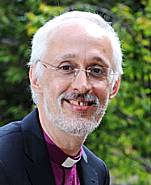
Sermon notes for the Admissions Eucharist from Dr. David Walker,
Bishop of Manchester and Visitor to the Society
Society of Ordained Scientists, Gathering, Launde Abbey, UK, Summer 2024
“Facts are sacred”, wrote CP Scott, long time editor of what I still like to refer to as the Manchester Guardian. “But”, he added, “comment is free”. Having been subject to the on-line reaction when I’ve written for Scott’s former paper, I can testify that those submitting comments exhibit no lack of freedom, or indeed any other inhibition that one might expect common courtesy or decency to place upon them. Scott made it a hallmark of his editorship not to confuse these two.
One of my own media sidelines is to be part of the team of presenters who bring listeners Radio 4’s Thought for the Day from Monday to Saturday, at around 0745. Because it is an uncontested slot, by which I mean that nobody gets to challenge me on air, or demand right of reply the following day, the rules are very strict. I work alongside a producer drawn from the Religion and Ethics team, who has two principle tasks. The first is to help me get my point across in as clear and concise a way as possible (I have a maximum of 2 minutes and 50 seconds, which amounts to around 450 words). The second is to ensure that, whilst I might range far and wide in the opinions I express, I have a firm evidential base for anything I present as fact. Listen carefully, and you’ll hear us presenters use little phrases like “as I see it”, “in my view”, or “for me”, to bridge the gap between fact and comment.
Science, is an exercise in finding facts, discovering the truths about the world about us. We propose and test hypotheses until we have confirmed them to a high level of probability. We can then treat them as factual unless and until fresh evidence arrives that makes our earlier conclusions unsafe. In that sense science operates a bit like the criminal court system, where an appeal can be heard if new and compelling evidence emerges. Perhaps the main difference, one for which we are profoundly grateful, is that the findings of which we become convinced and convicted are less likely to result in our being sent to prison. At least in most parts of the world. We may have our opinions on scientific matters, but woe betide any scientist who fails to follow Scott’s dictum when publishing in an academic journal.
Most people, most of the time, operate in a world beyond science, very much on the “comment”| side of Scott’s distinction. It’s a world where opinions and beliefs do not have to be quite so securely grounded in hard evidence, nor demonstrated beyond reasonable doubt. We don’t need a logical basis for preferring the work of one artist to another, or liking different types of music. We don’t need incontrovertible evidence to justify thinking one football team to be better than another, nor to form a view as to which political party is best placed to lead our country over the next few years. The problem comes when Scott’s boundaries get blurred, particularly if done so with intent.
Politicians are, I suspect, particularly inclined to overstep the boundaries between fact and comment. And it can’t help that most of them come from non-scientific backgrounds, where such behaviour is more acceptable. Here in the UK, the first main skirmish of the current campaign came when the Conservatives tried to package as factual, estimates of Labour’s tax policies that had been drawn up on the basis of assumptions chosen by Tory advisors. “Garbage in, garbage out” as we said in the earlier days of computers. And yet, even though the Civil Service moved swiftly to rubbish the figures, they are still being trotted out as though they had a sound factual basis. Indeed Labour have largely given up on refuting the allegations, in favour of presenting their own dodgy data instead.
As both scientists and ministers of religion, we in this Society are in a good position to understand both hard evidence driven facts and matters of opinion. The same evidence of the world around us can, and does, lead us to quite different theological conclusions. So how do we maintain clarity as to which side of Scott’s boundary we are standing on?
Well, one of the things I have learned from almost a quarter century of being a bishop, is how important it is for me not only to understand the perspectives of people whose opinions are very different from my own, but to be able to argue their case along the lines that they would argue it themselves. People really appreciate being understood, and their opinions respected, even when they are not agreed with. Yet where I find I have to resist is when I am asked to give equal space and respect to arguments that play fast and loose with the facts. Or where clear and demonstrable facts are denied because they fail to support the opinion someone wishes to maintain.
So, one of the things that grieves me most in an election campaign is when interviewers treat false facts with the same respect that they properly offer to diverse opinions. I still shudder at the comment of a former, and possibly future, US President who, confronted with the falsity of his statements, spoke simply of having “alternative truths”.
“Facts are sacred”, said Scott. Most of the time, in that sentence, the emphasis is placed on the first word. But we, above all others, should understand what that final word “sacred” means. It goes beyond saying “treat with respect”. To be sacred is to be precious to God. We follow the God of truth, the God to whom truth matters. We need to treat facts with the same reverence as we treat other sacred objects or entities; to recognise that they might form the basis for comment and opinion, but can never be collapsed into them. And maybe, our dual training, as scientists and theologians can help us do that, both for our own benefit and the benefit of our congregations and communities.
 Society of Ordained Scientists