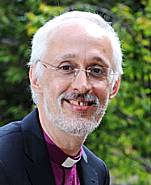
Sermon for the Admissions Eucharist from Dr. David Walker,
Bishop of Manchester and Visitor to the Society
Society of Ordained Scientists, Gathering, Launde, UK, Summer 2022
I love being a minister in a church that has a set lectionary for every day. Not only does it save me from having to pick passages from which to preach, it offers me opportunities I would never have grasped. So, here today, as we meet to admit a new member and reaffirm the vows of existing Ordained Scientists, we have, in our Old Testament passage (1 Kings 18: 20-39) an account of one the most rigorously executed scientific experiments in antiquity. So let’s have a look at how it might help us today.
Elijah sets out with a clear hypothesis – that the God of Israel is supreme and Baal is nothing. He makes every possible concession to allow his hypothesis to be disproved – giving his adversaries plenty of time, dousing his own offering three times in water – before finally proving his proposition. You can imagine it set out, not as a passage of scripture, but as an article for a modern peer reviewed journal. My only quibble with his scientific method is that, in having his enemies seized and killed (in a final verse the lectionary chooses to omit), he has perhaps taken the task of cleaning up the laboratory afterwards, to excess. Of course, those were the days before Ethics Committees pored in such detail over every aspect of even the simplest research proposal.
INTEGRITY IN EXPERIMENTS
Elijah, of course, has a lot invested in the success of his endeavours. Had his adversaries succeeded, or had he failed, he would have been the one seized by the crowd and destroyed. And yet he is meticulous in doing nothing that might lead to accusations that he has rigged the experiment in his favour. Over the last five years, I’ve become increasingly involved in supporting those living in high and medium rise buildings affected by the cladding scandal. Many of them are living in fear of both fire and the financial ruin they will suffer in seeking to rectify the mistakes of developers and freeholders. Back in March I was able to take Archbishop Justin on a visit to meet residents of one particular city centre block in Manchester. From the balcony of one apartment they listed the costs in millions it would take for each of the blocks we could see to be made safe enough for their homes to be capable of attracting a mortgage again. As the Grenfell Inquiry has discovered, many unsuitable materials found their ways into the fabric of people’s homes because the tests for combustibility were rigged; fully real world conditions were not simulated. In a parallel case, at least one major motor manufacturer has been found to have installed test cheating software into their systems. To move to yet another sector, pharmaceutical companies are regularly accused of hiding unhelpful research findings that might destroy the potential of a drug they have spent significant sums in developing.
Central to our calling, as Ordained Scientists, is that science must be honest. No matter what the positive or negative consequences, be they commercial, reputational, or career damaging, the integrity of the research process must be paramount. Every falsified experiment not only damages its own hypothesis, it undermines the entire scientific exercise. In my most suspicious moments, I have wondered whether the water Elijah threw over the wood might have actually been highly distilled, and readily combustible, alcohol, but I doubt it. It’s a fair experiment, as experiments should be. Over 2500 years on, our own engagement with God’s creation is too precious to let us collude with anything less than full integrity in our research processes and practices.
EXPERIMENTING WITH GOD
Arguably, one of the oldest ethical restrictions for any experiment is issued by Jesus himself. When he’s challenged by Satan to throw himself from the pinnacle of the temple, he memorably responds “You shall not put the Lord your God to the test”. At first glance, that might seem to be a rejection of what Elijah did, in proving God’s power to the Israelites. But the two are actually almost direct opposites of each other. Elijah’s experiment offers space in which God can choose to act; Satan seeks to deny God space, to force him either to intervene or to see Jesus’s ministry destroyed at the very outset. If Satan can force God’s hand, then he can lay claim to be God’s equal or greater. Having failed here to get Jesus to collude with his experiment, he retreats, only to return later and
seek to force God a second time, this time in the baying voices of those on Good who shout for Jesus to prove himself by calling on angels to bring him down, unharmed, from the cross.
By contrast Elijah performs an experiment that allows God to show his power, if he so wills. God remains supreme.
The scientific endeavour, in all its fields, is, at its very best, an exploration of the wonders of God’s creation. It should evoke, both in those who engage in it and those who simply receive their results and discoveries, a sense of awe that is only a short step (if even that) away from worship. Far from confining God into ever smaller gaps in our human knowledge, science reveals the ever increasing complexity and beauty of all that his hand has created, from the delicate interplay between universal physical constants that makes complex molecules and hence life forms possible, to the gentle pressure of evolutionary forces, moulding life into multiplicity. St Francis (you wouldn’t expect me to complete a sermon without at least one reference to him) loved every aspect of God’s creation, even death itself, because in all of it he saw the handiwork of his creator and redeemer. Our role as ordained scientists is not simply to do science, but to exult in it, something we see the very best public presenters of science do on TV. Our response should be at the level of our passions and emotions as well as our intellect, so that the world can catch a glimpse of the glory of God in our endeavours.
Elijah’s successful experiment doesn’t bring his troubles to an end. Only a few verses later he is once more fleeing for his life, with Jezebel, her mind closed to any event that doesn’t fit her own faith, having vowed to destroy him. But whatever troubles he has yet to face, his journey deeper into God goes on, first to encounter his Lord in the still small voice on Mount Horeb, and eventually to be taken up to heaven in a fiery chariot. Our own journeys may not contain quite such explicit theophanies, but they play their part, and do so to the glory of God. Amen.
 Society of Ordained Scientists