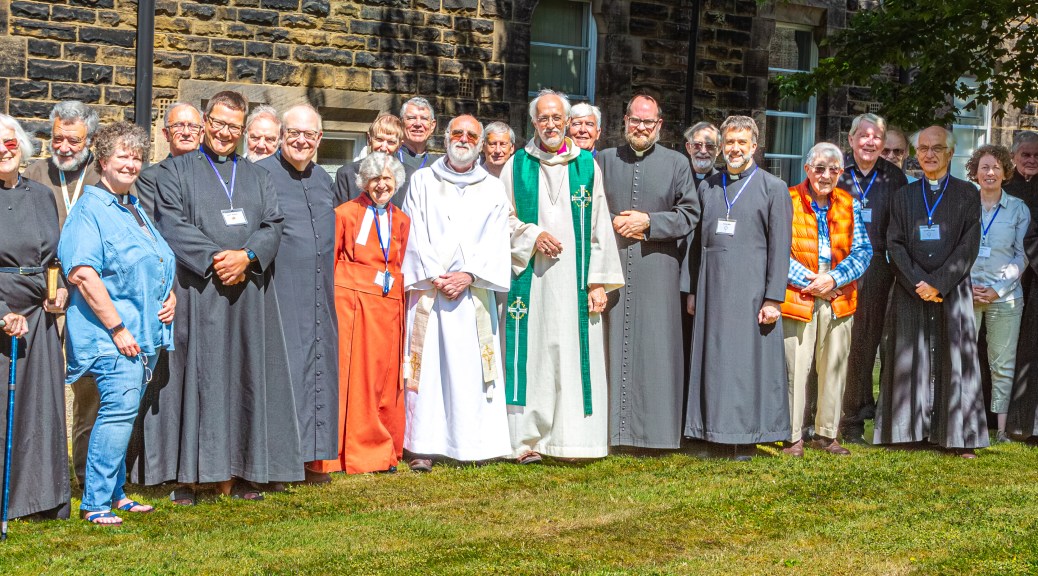
Founded as a community of prayer for dual vocation priest-scientists in the Church of England, from early days we found our lives were linked with wider circles of prayer, practice, faith, and life. As we expanded, we found that families and friends were committed to the aims and rule, but unable to claim both titles, ‘ordained’ and ’scientist’. Others held those titles and were committed to the aims but could not take on the rule of prayer. Today, therefore, we have evolved into a Society of three orders – associates, companions, and members.
Associates
Associate membership is open to anyone committed to furthering the Aims of the Society and upholding the community. Associates can be admitted at any time. If you’re interested, reach out to a member to learn more or simply apply.
Companions
Some associates choose to take on the Society’s Rule of Prayer, vowed to pray daily, participate regularly, and publicly witness to the Society in worship. We make and reaffirm our vows annually at a Eucharist during the Society Gathering. Associates who are interested should reach out to the Warden or Provincial Warden.
Members
We recognize the unique commitments and obligations of those who hold authority in both Christian and scientific communities. They hold responsibility to their communities – to represent a wider group, maintain tradition and practice, and share wisdom. Full or ‘voting’ membership is open to companions who have:
- held authority in a Trinitarian Christian church for at least three years and are in good standing with their church
- held authority in Science, Technology, Engineering or Medicine for at least three years and are in good standing in their discipline.
Companions wishing to take on Memberships, should reach out to the Warden or Provincial Warden to begin discernment.
Roughly 2 in three people in the Society are Members and have the option of taking on the Rule of Prayer for life.
Why Three Categories?
The Society is built around a tentpole model of community. We strive to be as inclusive as possible (not building walls) but recognize the need for shared identity and purpose (the roof that defines the space). Our charism and vocation provide that roof. The categories of Member and Companion provide tentpoles. They remind us that we are grounded in authority – both holding it and being under it – and defined by our practice of prayer. They differentiate us from the many other (excellent) science and faith organizations.
 Society of Ordained Scientists